

-
Programmatic Ads - The Secret To B2B Lead Gen in 2023
- What is a lead generation campaign?
- How does this work in practice?
- Third-Party Data Sets
- Wrapping It Up: Programmatic B2B Lead Generation Tactics
- What creatives do I need for such a lead generation strategy?
- Why should I use programmatic lead generation when I already use LinkedIn?
- Will programmatic help brand awareness?
- What DSP should I use?
- How much do I need to invest in programmatic B2B advertising?
- How do I know which KPIs to use?
- Do I need an ad exchange or a private marketplace?
- How can I prove the success of my campaign?
- When should I measure results?
- What is programmatic B2B account planning?
- Conclusion: B2B Lead Gen
Programmatic Ads - The Secret To B2B Lead Gen in 2023
If you are a B2B marketer, you probably use email marketing, various lead gen partners and perhaps pepper in some Google Ads PPC, not to mention a few LinkedIn Ads, right?
Have you considered programmatic advertising to generate high-quality B2B leads? Let 2022 be the year to discover the secret weapon that can generate hundreds of quality leads for you.
With the proper targeting techniques and killer B2B lead generation strategies proven by our agency, you can also run highly targeted B2B programmatic lead generation campaigns.
You just need to work with the right data partners and a solid technology stack that can help facilitate such a campaign.
In this handy post, we’re going to share a few targeting methodologies that will help you get more qualified leads.
Let’s start with a few basics:
What is programmatic advertising?
Programmatic advertising uses automated platforms to buy ad inventory, often via real-time bidding. It allows marketers to streamline tasks by automating buying ad space.
You’ll have seen it because programmatic is the technology behind the millions of ads you see online every day, and programmatic is one of the highest-performing digital channels for driving B2B leads.
Its ability to provide highly targeted campaigns at scale appeals to the fundamental nature of today’s marketers. It allows them to save money and time by reducing wasted ad spend on irrelevant traffic while delivering qualified B2B leads at a scale.

What is a lead generation campaign?
Lead Generation is the process of attracting websites visitors to your site with the intent of exchanging contact information. Generally speaking, leads are usually looking to learn more about you or your services and may or may not be ready to make a purchase.
For a prospect to share their contact information, you need to offer a high-quality lead magnet. Examples of a lead magnet include eBooks or whitepapers, webinar signups, online courses or infographics. Once you have collected their information, your sales team can begin nurturing the lead.
So let’s look at some of the targeting methods that will help you deliver an effective display, video or native programmatic campaign that is laser-focused and will return you a ton of leads from your target audience.
Turn up your retargeting
Retargeting has also gained some use by B2B buyers and marketers. We generally allocate 10%-20% or so of every budget to retargeting. Prospects who are less ready to buy are probably more inclined to buy if their brand is constantly visible in their market. This will increase the chances that your audience will choose your company over your competitors and stay top of mind, making all of your lead generation campaigns deliver.

- Hot accounts that are near to closing but need a further push across the decision-making group
- Colder target accounts that sales have not yet nurtured
- Old clients that you want to win back
- Existing clients where you are looking to upsell
- Customers who are coming to renew
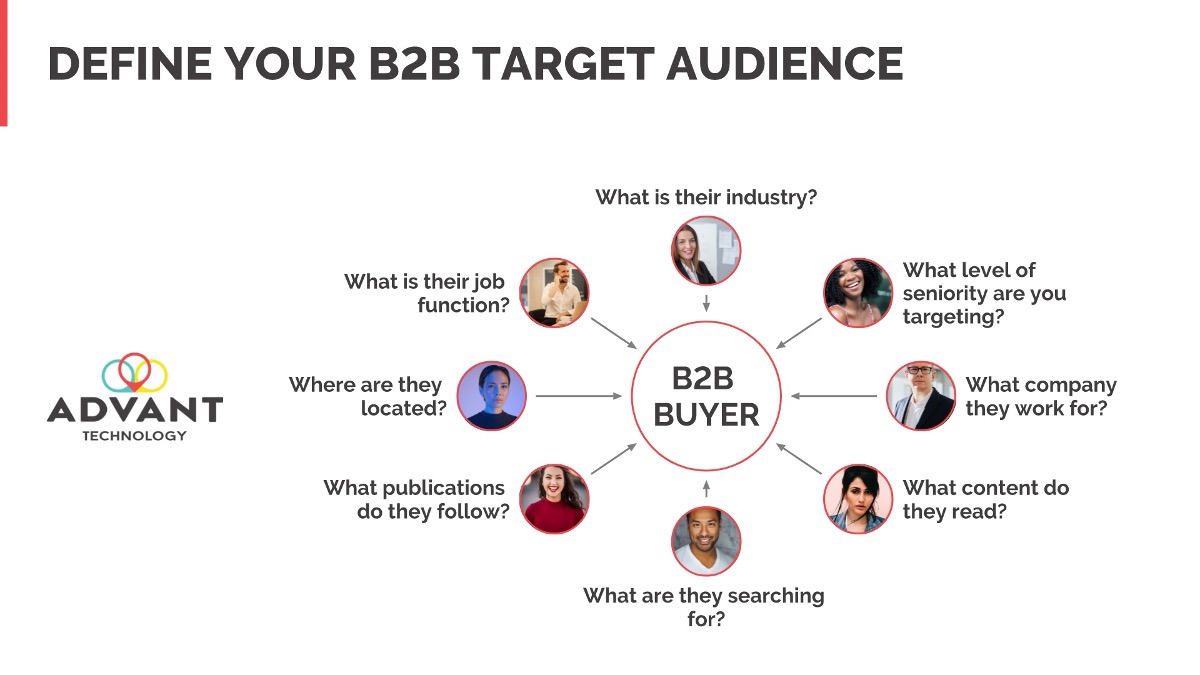
Firmographic Targeting
Firmographic targeting is the process of qualifying potential customers based on their company-level data – like total revenue, employee count, industry, location (region/territory), and more.
Some firms rely on third-party research firms, while others use manual demographic data entry processes to capture this critical business intelligence, but these efforts are expensive in many cases. We just need the parameters and this can then be applied to any international programmatic lead generation campaign.
The primary objective of firmographic data is to assist companies separate relevant B2B prospects into distinct categories, allowing them to close the gap between observation and action. They don’t need to spend time and effort separating this data before making decisions if marketers, salespeople, and C-suites have access to segmented information that classifies potential clients by size, location, revenue, or growth trajectory. Instead, potential purchasing partners are pre-sorted into relevant categories.
Job Title Targeting
A good starting point is using a TAL, but within those TALs, you want to make sure you reach the decision-makers. Job title targeting allows you to reach out to high-value company decision-makers based on their job title, function, and seniority level.
It aids in concentrating ad spending on business experts who can influence or make the ultimate purchase decision. It also helps you save money by limiting your media spending to professionals who match your job targeting criteria.
We use proprietary techniques to ensure we capture all the relevant job titles when you work with us. Let’s say you want to reach an IT engineer, but in reality, IT engineers may have many different job titles and all of these need to be included to maximise the potential leads or else your marketing campaign would be limited.
How does this work in practice?
We’d look to include the likes of VP IT Engineer, Deputy IT Engineer, IT Engineer Director, etc. As you can see, this will give you the widest exposure and more leads! Little details like this may mean the difference between success or failure in your lead generation strategy.
Technographic Data
Relevant to IT and SAS companies, technographic data, or technographics, refers to the technology and software systems companies use to run their organisation. B2B marketers can use technographic data to build a full technological profile of a company that they wish to target through paid media.
When leveraged correctly, B2B marketers can identify companies using, or have previously used, competitive technology as a conquesting tactic.
Third-Party Data Sets
We’ve discussed using various segmentation techniques to reach your audience, and comprehensive industry research is always required, but with the above methods, you may still be leaving quality leads on the table.
Our last method discussed using third party segments from the likes of Ziff Davis, Loatme and others. Using the IT engineer example, here are all the relevant segments we can apply, all available in DV360, over 40 segments.
Here is a snapshot of relevant segments
Contextual B2B Targeting
One of the core benefits of programmatic advertising is the ability to place contextual advertisements. Contextual advertisements are ads that are based on the context of the webpage. Let’s say you are reading a post on cyber security. By researching, then selecting and applying keywords related to cyber security, you are able to deliver contextually targeted ads that are relevant to the audience.
This will help increase your CTR from relevant audiences, which should help generate leads more effectively. One of the most critical aspects of Programmatic B2B lead generation is selecting the right keywords.
Wrapping It Up: Programmatic B2B Lead Generation Tactics
In short, there are multiple ways to generate leads through Programmatic Advertising tactics. In addition to contextual targeting and data segmentation, real-time bidding is a must for any B2B lead generation strategy or campaign. Let’s take a look at some FAQs.
What creatives do I need for such a lead generation strategy?
Native or display ads will work best. Native ads which consist of an image, headline and text are easy and cost-effective to produce. Display ads such as image and html5 will require a bit more thought but aren’t always more effective at generating leads.
Why should I use programmatic lead generation when I already use LinkedIn?
There is no doubt LinkedIn is a great tool to generate quality leads; after all, LinkedIn has access to fantastic ad formats and unique data, even with their lead generation pre-populated forms, it can still be expensive, so it’s worth testing different lead gen tactics to see which is best. Programmatic data partners such as Bombora also offer completely unique data to LinkedIn, enabling advertisers to benefit from increased reach, so you end up with more valuable leads.
Will programmatic help brand awareness?
Yes. As part of the nurture journey, you must also focus on your brand. Not every campaign you run should be purely focused on lead gen campaigns. Invest in your brand, and every lead generation channel you run across the customer journey will become more effective.
What DSP should I use?
We recommend using Google DV360 since it gives you access to the broadest number of integrations from data partners and supply-side inventory?
How much do I need to invest in programmatic B2B advertising?
There is no correct answer here, but there is a trade-off between the time it takes your team and a B2B programmatic agency such as Advant Technology to set up and manage such a campaign. In general, we recommend budgets of at least $5k per month in media spend.
What’s the difference between Programmatic B2B Lead Generation and traditional lead generation?
The key benefit of programmatic B2B lead generation is that it allows marketers to automate tedious processes. There are various tactics available, but overall a successful campaign will integrate a mixture of all the techniques mentioned above for a targeted campaign with a high potential for success.
How do I know which KPIs to use?
While many metrics are available, overall, marketers should measure conversions and ROI. How much has this campaign made compared to the investment spent? That said, it is good practice to monitor all relevant KPI’s throughout the campaign lifecycle.
What kind of technology is available to support Programmatic B2B Lead Generation?
The marketing industry has become digital-first. This means that any marketing team should have access to all the tools needed. Today, marketers have a wide array of software and APIs available to ensure they can measure, manage and automate their campaigns.
Do I need an ad exchange or a private marketplace?
Once you have identified your segmented targets, gaining access to these users through various exchanges is vital. This ensures that you reach your target audience at scale through programmatic advertising. DV360 supports direct integration with DSPs (digital supply-side platforms) and ad exchanges. If a particular publisher is relevant to your campaign, consider reaching out to them and establishing a private marketplace deal whereby you get preferential access to that publisher. IDG is an example for the tech sector.
How can I prove the success of my campaign?
There are many ways to measure the success of a B2B programmatic advertising campaign. Setting up attribution models is crucial, especially if you have multiple campaigns running or are using various channels. While every company has different objectives and KPIs, it’s good practice to track conversions and measure ROI.
When should I measure results?
Every marketer has a different approach to the KPIs they want to measure. Generally speaking, it is a good idea to track results from day one and continue throughout the life cycle of your campaign. in B2B marketing, you will find that the lifecycle of a buyer is much longer than B2C, so make sure you measure across at least the sales lifecycle.
As a marketer, what do I need in place before starting a programmatic advertising campaign?
Ensure you have access to all required data points when running a B2B programmatic campaign. This includes access to email databases, CRM systems and customer data from various sources.
What publishers do you recommend?
As a programmatic agency company with over eight years of experience in the technology industry, we’ve built up an extensive list of relevant websites that can be leveraged within your programmatic campaign. An excellent place to start is identifying the websites your audience spends their time on. We can help find relevant sites for you as part of our planning and buying service.
What is an excellent programmatic B2B account structure?
Depending on your business requirements and marketing objectives, you can easily segment campaigns by vertical, product or buyer persona. Some of the most common segmentation include:
- Industry verticals such as finance, healthcare, telecom or retail
- Products including hardware, software, cloud services etc.
- Business units within the company
What is programmatic B2B account planning?
Programmatic buying can be highly complex, involving thousands of different advertising channels.
The key to success is to develop a systemised approach where all data points are considered on an ongoing basis.
It’s advisable to set clear goals and determine how you will measure success from the outset.
To succeed with programmatic, marketers need a scalable solution that can meet the demands of an ever-changing digital landscape. Technology should be implemented to automate as much of the campaign as possible, not only on the ad buying side but also for nurturing and remarketing.
What are the best selling points to use when pitching programmatic?
Programmatic advertising is often thought of as just another form of digital marketing, but it is more than that. Programmatic can lead to high-cost savings, simplified campaign management and improved campaign ROI. You just need to ensure you have access to all the relevant technology and tools available.
What are some common programmatic pitfalls?
- Poor research into audiences
- Insufficient campaign planning
- Bad data quality
- Poor creative execution
- Incorrect bidding strategy
- Loose targeting
Conclusion: B2B Lead Gen
Whatever method you use, a structured approach and solid foundation for creating A/B testing are critical to an effective lead generation process.
A well-optimised landing page and strong lead magnets are essential and creative to drive effective CTRs.
Always implement pixels properly to track and attribute which channels are delivering the best ROI. We recommend using Google tag manager to lay down your pixels, so the dev team doesn’t need to be disturbed.
Remember, programmatic advertising gives you the power to target your audience. You can filter based on occupation, seniority, technology stack etc.
Please don’t fall into the trap of thinking that this is an easy option or a silver bullet by applying it without due research and planning.
Programmatic is not only fantastic from a technological standpoint, but it also gives B2B companies new and innovative methods to scale their digital marketing and content distribution efforts beyond LinkedIn, PPC, and email marketing by continuously connecting them with the appropriate prospects at the right time using the proper methods we have discussed.
If you are not sure where to start with any part of the lead generation process, please do not hesitate to contact us for a no-obligation chat. We can ensure you put the right strategies in place and see your lead generation efforts increase dramatically.
Free Paid Media Review
We are a world-class programmatic marketing agency that can generate more sales and leads for you. Leave your email address, we will contact you for your free paid media review.