

As the tourism industry continues to evolve, destination marketing organizations (DMOs) and travel companies need effective digital advertising strategies to attract visitors. This comprehensive guide explores proven methods for promoting your destination through digital channels, based on years of experience working on destination marketing campaigns with tourism brands worldwide.
The State of Tourism Marketing Today
The tourism industry has undergone significant transformation in recent years. While the COVID-19 pandemic created unprecedented challenges, the sector has shown remarkable resilience and adaptation. Today’s destination marketers must navigate a complex landscape where digital advertising plays an increasingly crucial role in attracting visitors.
Key Industry Trends in Tourism Marketing in 2025:
- Shift toward experiential travel content
- Rise of sustainable tourism messaging
- Increased focus on domestic tourism
- Growing importance of mobile-first marketing
- Integration of virtual experiences
Understanding Digital Advertising for Tourism
Digital advertising offers unique advantages for destination marketing organizations and travel brands:
- Precise audience targeting based on travel intent
- Real-time campaign optimization
- Multi-channel presence across search, social, and display
- Rich media storytelling opportunities
- Measurable ROI and performance tracking
Digital ads are easy for people to find online, they’re fast, they’re flexible, and they give you access to huge audiences across search engines, social media platforms and video sites.
They also allow us as marketers to be creative with our content by using different types of formats such as images or videos, which are great for storytelling.
Digital advertising will allow you to reach people at the perfect time with the right message – all based on your traveller’s location, intent and interests.
You can attract new travellers by showing prospects your destination in a way that is relevant to them. It will help you increase your brand awareness amongst prospective customers who may not be searching for a destination at all or, on the other hand, they may be actively looking for their next holiday (in-market audiences).
The Role of DMOs in Digital Marketing
The role of a DMO, aka Destination Marketing Organisation, is to get tourist traffic across the regions by implementing a range of marketing strategies sustainably, such as:
- Developing comprehensive digital marketing strategies
- Creating compelling destination content
- Managing paid media campaigns
- Coordinating with local tourism stakeholders
- Measuring and reporting on tourism metrics
Why is Country Marketing Important?
Successful country marketing can greatly benefit the local tourism industry, including restaurants, entertainment sites, hotels, airlines, local transportation, car rental firms, tour operators, and other sectors. This increases spending in your country, helping boost the economy and allowing you to share your great culture with potential visitors.
Essential Digital Marketing Channels for Tourism
1. Search Engine Marketing (SEM)
- Target high-intent travel keywords
- Create destination-specific ad campaigns
- Optimize for local and international search terms
2. Social Media Advertising
- Instagram: Showcase visual destination content
- Facebook: Target specific traveler demographics
- Pinterest: Capture early-stage travel planning
- TikTok: Engage younger travelers with authentic content
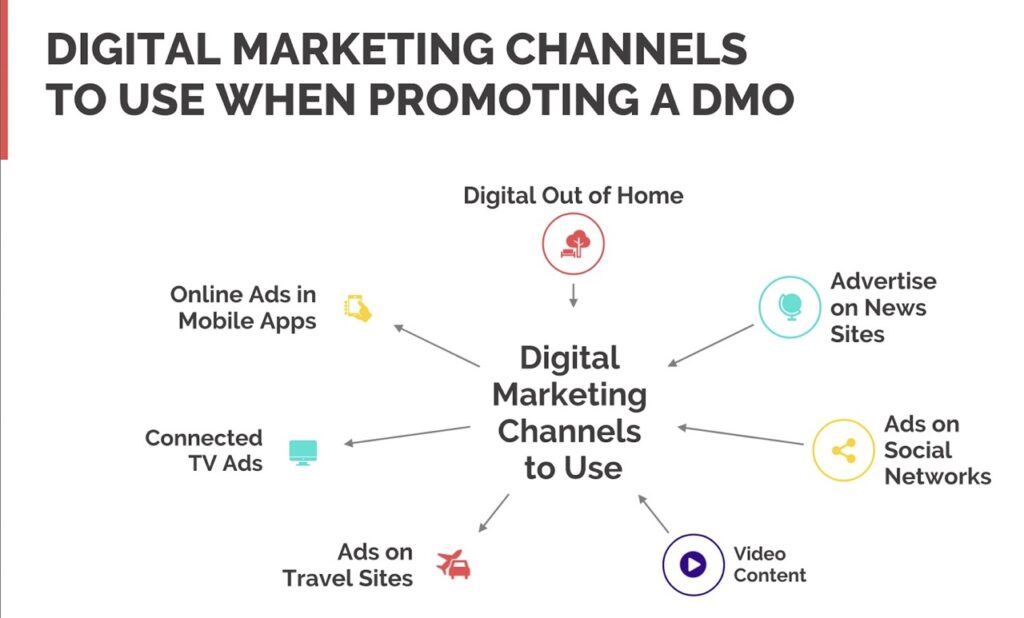
3. Programmatic Display Advertising
- Connected TV advertising
- Programmatic audio ads
- Digital out-of-home (DOOH) tourism marketing
- Native advertising on travel websites
- Mobile app advertising
4. Video Marketing
- YouTube destination campaigns
- Social media video ads
- Connected TV commercials
- Immersive virtual tours
The Travel Decision-Making Journey
- Dreaming Phase
- Inspire through stunning visuals
- Share authentic destination stories
- KPIs: Reach, engagement, video views
- Research Phase
- Provide detailed destination information
- Highlight unique experiences
- KPIs: Click-through rates, time on site
- Planning Phase
- Offer practical travel guides
- Share itinerary suggestions
- KPIs: Downloads, email signups
- Booking Phase
- Present clear calls-to-action
- Showcase partner accommodations
- KPIs: Referral clicks, conversion rates
- Experience Phase
- Provide local recommendations
- Share real-time updates
- KPIs: App downloads, engagement
- Sharing Phase
- Encourage user-generated content
- Facilitate social sharing
- KPIs: Hashtag usage, social mentions

Creating Effective Tourism Ad Creatives
What creative should I use?
Depending on the audience you want to reach, you might use different types of creativity. Gone are the days of showing a couple of travellers lying on a pretty beach, today travellers are looking for memorable experiences.
Here are some ideas:
Visual Content
- Showcase authentic experiences over staged photos
- Feature diverse travelers and activities
- Highlight unique destination features
- Include recognizable landmarks
- Use high-quality, professional imagery
Video Content Strategy
- Create immersive destination tours
- Share local culture and traditions
- Feature authentic traveler testimonials
- Showcase seasonal activities
- Develop mobile-optimized content
User Generated Content (UGC)
- Make sure you have permission to use the content
- Feels organic and authentic
- Helps build trust
Measuring Tourism Marketing Campaign Success
Here are some metrics to track:
Campaign Performance
- Click-through rates
- Conversion rates
- Cost per acquisition
- Return on ad spend
Brand Impact
- Brand awareness
- Consideration metrics
- Destination sentiment
- Share of voice
Tourism Outcomes
- Visitor numbers
- Length of stay
- Tourist spending
- Economic impact

Digital Ad Metrics to Monitor
Advanced Tourism Marketing Strategies
Leveraging User-Generated Content
- Curate authentic traveler content
- Create branded hashtag campaigns
- Partner with travel influencers
- Develop social media contests
Data-Driven Optimization
- Use traveler behavior analytics
- Implement dynamic creative optimization
- Conduct A/B testing
- Apply machine learning insights
Future Trends in Tourism Digital Advertising
- Virtual and augmented reality experiences
- AI-powered personalization
- Sustainable tourism messaging
- Voice search optimization
- Blockchain-based loyalty programs

Conclusion
There are many digital advertising tools out there, but not all of them will work for your destination.
You should pick the ones that best suit your goals and target audience. Remember- the more you test, the better chance you get results!
We are an expert travel marketing agency, having worked with Destination Canada, Cyprus Tourism Organisation, Tunisia National Tourism Organisation, Polish National Tourism Board, Greece National Tourism Organisation and many other national and local tourism organisations.
If you are a travel brand or a country or destination marketer and need help creating a destination marketing campaign, we’d love to hear from you. Please send us your RFP, and we’ll respond with a well-crafted media plan.
Whilst Advant Technology is headquartered in the UK, but we help brands globally, so don’t hesitate to ask us if we can help you in your target market.
MORE TO EXPLORE
