

Benefits of Programmatic Audio Advertising
With programmatic audio advertising, you can reach valuable and highly engaged audiences with advertisements while they are listening to their favourite online audio content. It allows brands to use yet another digital touchpoint throughout the buyers’ journey to deliver highly tailored messaging at scale.
Why Is Digital Audio Advertising popular?
Digital audio is booming in popularity. According to eMarketer, 2020 was the year digital audio surpassed terrestrial audio. This has opened a massive opportunity for SSPs, supply-side platforms and ad exchanges to take advantage of this listenership and monetise audiences at huge scale.
What drives the growth of digital audio ads?
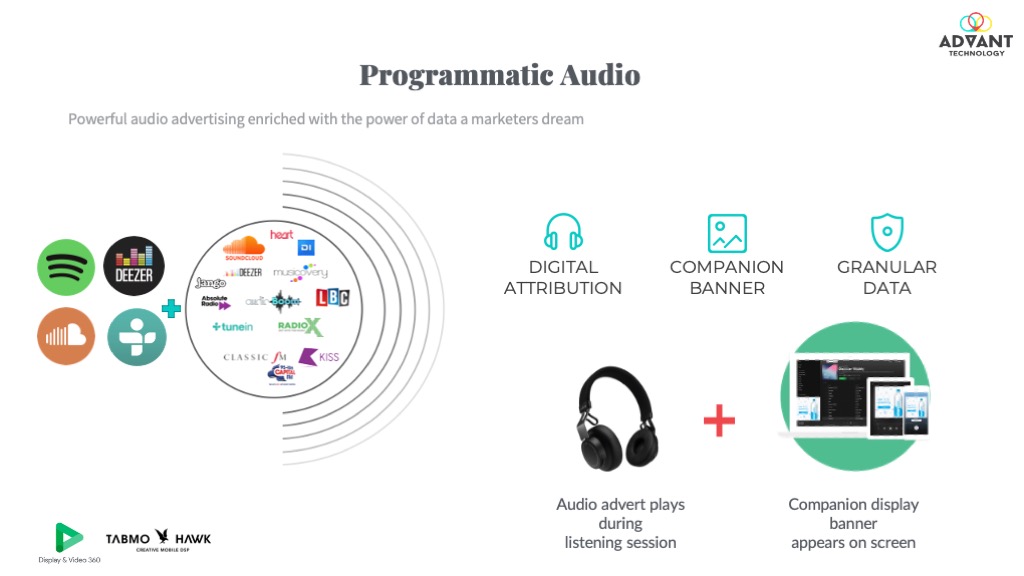
That growth comes from the increase of music streaming services and podcast listeners. Most of the digital audio content is streamed on mobile devices across apps such as those listed here.

Popular music and podcast apps:
- Apple Podcasts
- Google Podcasts
- Audible
- Stitcher
- TuneIn Radio
- Spotify
- Amazon. Prime Music
- Deezer
- YouTube. Music
- SoundCloud
11 Reasons Why You Should Do Programmatic Audio Ads
Our programmatic media agency can help develop a marketing strategy that leverages programmatic audio buying at scale globally. Send us a note with your campaign budget, and we’ll be happy to look at a digital radio ad campaign for you so you, too, can reap the benefits of this valuable audience.
If you’re still not convinced programmatic audio ads are the right choice for you, we’ve compiled a list of 11 reasons why you should include it in your next advertising budget.

1. Reach New Audiences
With all of the available digital channels at businesses’ disposal today, it can be difficult for advertisers to maximize their marketing budgets. A well-rounded media plan should reach audiences at scale and efficiently. Programmatic audio does exactly that.
2. Highly Engaged Listeners
What makes programmatic audio advertising uniquely effective is its ability to connect with listeners.
Listeners are not distracted or interrupted by digital audio the same way they are when watching television programs or online videos; therefore, they are less likely to switch to an alternate activity. Programmatic audio ads provide greater freedom for listeners since the ads are played in the background or while they are engaged in another activity.
3. Low CPM Costs
On the surface, programmatic audio advertising offers low cost-per-thousand (CPM) rates comparable to other digital media channels.
4. Advanced Analytics
Advertisers are able to track the effectiveness of their campaigns in real-time by leveraging advanced analytics capabilities within platform dashboards. These metrics allow brands to measure campaign performance, such as the number of impressions and exposure times, in addition to monitoring ad engagement levels-including the percentage of users who listened through a complete audio ad and those who heard part of an entire audio ad.
5. Improved Sales and ROI
As always, the ultimate goal in any advertising campaign should be to improve sales and ROI. Fortunately, programmatic audio advertising enables brands to target their ads to likely customers by leveraging specific data points, such as geographic location or website interests. This valuable insight can give advertisers a valuable edge in reaching key people who are more likely to purchase.
6. Audio Ad Creative Flexibility
The more customisation and personalisation applied to audio ad content, the more effective it will be in reaching interested listeners. You can now use tools that allow you to deliver dynamic ads based on who the audience is, so you can deliver hundreds of ad variations that are highly targeted.
7. Low Creative Costs
Programmatic audio ads can be created quickly and at a low-cost thanks to standardised formats. As audio requires no visuals, it has the potential of being a lot cheaper. An opportunity for companies to get in front of new audiences without committing a lot of time or money-and with potentially high returns.
8. Greater Brand Awareness
Programmatic audio ads are designed to make brands more familiar with listeners who do not have time to read long-form content or watch longer video ads when they want to hear an informative message about a certain brand, product or service. With shorter forms of media becoming the preferred means of communication, it’s no surprise that brands are increasingly turning to programmatic audio ads as a way to reach millions of listeners.
9. Real-Time Measurement
As with all digital advertising, one of the best advantages is the ability to easily measure campaign performance and ROI. Because marketers can track ad exposure and engagement levels in real-time, they can make adjustments and improvements as needed.
10. Brand Safety and Trustworthiness
Through the use of brand safety and fraud tools you can monitor and any fraudulent impressions and switch off traffic sources that are not meeting standards.
11. Flexibility with Media
Ads can be targeted to music apps or podcast audiences across allowing brands to engage better with their audience depending on the context of their message.
The benefits of digital audio ads are clear, targeting consumers in new ways as they consume content across the web.

FAQs
Let’s take a look at some common questions about programmatic audio ads.
Which music streaming services are available to target?
Major audio platforms include Spotify, YouTube Music, Apple Music, Tidal, SoundCloud, Pandora, Slacker Radio, iHeartRadio, TuneIn, and others.
What are the specifications for audio ads?
The specifications you need to consider will ultimately depend on which DSP you use but try checking out the following from Google DV360 as a guideline.
What are the typical CPM costs for audio ads?
CPMs generally vary between about $5-$40 CPM depending on the target audience, availability of inventory, competitiveness of other advertisers targeting the same user and the app/environment. Many factors contribute to the final CPM.
What marketing budget do I need?
As a programmatic agency, we recommend not less than around $5,000-$10,000 per campaign,which typically lasts 2-6 weeks. However, the final budget depends on your campaign goals.
Can people click on my audio ad?
Yes, sometimes.
It depends on where the ad has been served, which app you target, and whether they accept companion banners. In our experience, only around 0.25% of audio ads are served with a companion banner. So, if you’re running an audio ad campaign looking to generate traffic, we suggest you look at another channel.
Conclusion
As a programmatic advertising agency, we have found that audio ads are an effective way to built brand awareness and boost engagement.
Digital audio ads are a bit different and whilst you won’t generate huge traffic there, they can be a great way to garner interest and increase brand awareness.
They are a great way to target a specific demographic and can be highly effective when partnered with a strong marketing strategy.
The increased use of technology and consumers appetite for adopting these trends has led to a rise in digital audio consumption, naturally, where users go online, ads will follow.
By broadening the channels you use to include digital audio advertising, you may reach people on a level that fits their listening habits in an environment that does not have huge ad frequency thus combating banner blindness. Perhaps one day, the new norm will be audio ad deafness?
In conclusion, there is no denying that digital audio advertising can be an effective channel for brands looking to target their online audiences in new ways. To discuss the possibilities of your campaign, don’t hesitate to get in touch with us today.

Ben Myers
Free Paid Media Review
We are a world-class programmatic marketing agency that can generate more sales and leads for you. Leave your email address, we will contact you for your free paid media review.