Categories
Blog Guide Video Advertising

CPCV Video Ads! Kick Charge Your Brand Awareness

CPCV Video Ads: An Advertising Guide

What is CPCV?

CPCV stands for “Cost Per Completed View”. It is a relatively new type of advertising that has gained popularity over the past few years.

As marketers, we’re all pretty familiar with cost per click (or CPC) and cost per thousand impressions (CPM) pricing. But what about CPCV?

What is it? And why should you care? This article will answer these questions and more to help you understand what CPCVs are all about.

When considering whether to buy online ads, be it display, native or mobile, you need to familiarise yourself with the various pricing models that are available in the paid media ecosystem. Most likely, you’ll need to use a mix in your marketing strategy to maximise the ROI of your digital marketing.

Shameless Agency Plug
If you’re an advertiser looking to get more completed views, more brand awareness and maximum impact with your marketing budget, reach out to our team. We run many CPCV programmatic campaigns for advertisers across the globe, helping our clients to purchase cost-effective video campaigns at the most competitive low CPVs in the industry globally!

Benefits of online video campaigns - Advertising - CPCV - Advant Technology
Benefits of online video campaigns – Advertising – CPCV – Advant Technology

CPCV Meaning: How Does CPCV Advertising Work?

In short, advertisers only get charged when the video creative is served to the target audience and watched by that target audience to 100% completion or 30 seconds, whichever comes first.

The advertiser must brief the agency with the following:

  • Video Length
  • Market
  • Target Audience
  • Other metrics, such as viewability required
  • Budget
  • Timeline

The programmatic agency will then respond with a price per completed view.

CPCV ads work differently via Google Ads. YouTube has many formats, but the only format where you pay for completed views is their TrueView Format.

What is a YouTube TrueView format?

Youtube TrueView Format - Programmatic Advertising 101 - Advant Technology
Youtube TrueView Format – Programmatic Advertising 101 – Advant Technology

This is a skippable video format that allows viewers to choose whether or not they want to watch the whole video. This means advertisers only pay when someone watches the video creative in its entirety (or 30 seconds). The TrueView format is a type of in-stream format.

Why is CPCV pricing important?

Video spending continues to grow at an unmatched rate and is projected to reach US$207.50bn in 2025. With numbers like this, it’s no wonder why marketers are keen on finding new ways to earn exposure whilst minimising the risk of paying on an impression basis, whereby you pay no matter the completion rate of your video.

What are the Benefits of Online Video Campaigns?

  • Viewers are more likely to purchase a product after watching an online video campaign.
  • Video has the highest engagement rate out of any other type of ad format.
  • Digital video campaigns are more likely to result in higher brand awareness.
  • Advert recall is improved, especially when advertisements are paired with an image or text related to the product being advertised on screen.
  • Videos can be used to create a brand image or identify with an audience.
  • Video campaigns are an effective way to communicate complex messages, ideas or concepts.
  • You can track a video campaign’s performance with more accuracy than other forms of online advertising such as audio advertising.

As you can see, there are many reasons why you should be using CPCV video advertising in your marketing strategy. They provide a more engaging experience for the viewer.

CPCV Frequently Asked Questions

What websites can I feature videos on?

Programmatic advertising allows you to buy across thousands of websites globally, anything from forbes.com to The Guardian to Vice News and everything in between. If you want to advertise on a specific domain/site, let us know, and we can cost this up for you.

Can I run videos in mobile apps?

Yes, especially in mobile gaming!

Can I buy CPCV ads in rewarded video advertising?

Yes!

CPCV ads are particularly prominent among rewarded video advertising, where you will also get an excellent share of voice on the mobile screen and excellent viewability.

Most rewarded ad campaigns offer the user some kind of reward for completing an action; sometimes, that action is watching a video to 100% completion.

How can I lower my CPCV?

To lower your CPV consider broadening the targeting or extending the period. Consider adding more inventory to your mix, such as delivering across mobile, desktop and also in-app and using a mix of in-stream and out-stream formats.

How do you calculate CPCV cost?

Total budget divided by the total number of completed views.

Should I care about viewability as well as completion rate?

Both are important metrics to look at.

Viewability measures how many impressions were served and displayed above the fold.

The definition of viewability can be found here: This becomes an issue if you’re paying based on views and your campaign is completely invisible because viewers didn’t scroll far enough down the page for it to load properly.

The completion rate takes into account whether or not your video creative was watched in its entirety, whereas viewability is whether the ad was seen or not. These metrics are important for brand awareness.

Viewable completion rate matters because both metrics are critical to tracking the quality.

Other Metrics: CTR Click-through Rate

Most clients usually have sales as their goal. They want a solid, but that doesn’t mean that success should only be clicks and traffic.

Video advertising can serve the purpose of increasing awareness which over time will help to increase the salience and therefore sales by nurturing audiences over the long term.

What is the average CPCV in rewarded video advertising?

$0.01 to $0.07 for mobile in-app inventory. This can be a very competitive rate for 100% in view and fully completed video ads, so you should consider using them as part of your video strategy.

Average Cost of CPCV Campaigns

Across open exchange inventory, expect to pay around $0.01 to $0.10. Note Advant Technology accepts payment in GBP, EURO and USD.

How does CPCV advertising compare to other models?

The CPCV model is not alone in the online advertising bubble, and they all have their own pros and cons. Let’s take a look at some other pricing models:

Where can I run CPCV campaigns?

We offer CPCV pricing to advertisers and agencies globally.

Cost-Per-Mille (CPM)

It is still used by most for video advertising, but paying for impressions on video advertising doesn’t guarantee the ad was viewed, only that it appeared, this is where optimisation towards completion rate is key.

Cost-Per-View (CPV)

It is another model which looks at ‘views’, but again, what counts as a ‘view’ is not set in stone. Generally, a CPV campaign will be priced on a video quartile such as:

  • 25% completion
  • 50% completion
  • 75% completion
  • or the number of seconds

Of course, the advertiser can expect to pay less for a CPV campaign compared to a CPCV.

Cost-Per-Action (CPA)

Models are performance-based, meaning an advertiser would get charged only if action was taken after watching the video.

This action can vary from a specific download or purchase but mostly benefits performance marketers and isn’t great for building brand awareness.

Cost-Per-Second (CPS)

CPS is a time-based model and variation of CPCV, with the cost rising per second viewed.

This still doesn’t guarantee a whole video has been watched but can be more bang for your buck than the impression-focused models.

CPCV Video Ads! Kick Charge Your Brand Awareness - Advant Technology
CPCV Video Ads! Kick Charge Your Brand Awareness – Advant Technology

Wrapping it up

The way we consume content has changed significantly, from mobile devices to social media, so many options make it hard to grab anyone’s attention anymore.

This is where CPCV comes in – it guarantees a completed view.

There is no such thing as the perfect ad, so you need to test different pricing models until you find what works for your product/marketing goals.

A successful marketing campaign needs an arsenal of strategies: native, Facebook posts, tweets, prospecting, retargeting, performance, brand, search etc, the list goes on.

As mentioned earlier, CPCVs offer a more effective way of advertising compared to CPV because you pay only when the ad is viewed completely and successfully. Meaning you will get better value for your money by paying less on average per view or while still reaching your target audience effectively with relevant content.

So if you have a video and want to increase your brand awareness among your target audience, buying on a CPCV is the way forward. Reach out, and we can discuss setting up a campaign for you. Our CPCV campaigns start from around £1500 / 1800 Euros.

Free Paid Media Review

We are a world-class programmatic marketing agency that can generate more sales and leads for you. Leave your email address, we will contact you for your free paid media review.

Categories
Blog Native

Is Native Advertising Ethical?

Is Native Advertising Ethical?

An increasingly popular form of advertising that has the prospect of influencing consumer behaviour more than traditional advertising. Companies wanting to conduct a native ad campaign must know the various types of native advertisements and the ethical issues involved.

What is native advertising?

Native Advertising Definition - Advertising 101 - Advant Technology

Content by brands that looks and feels like the regular news we read on the web. It typically appears on news publishers as a form of marketing where ads are paid for by an advertiser.
If advertising is content that looks and feels like other content, then perhaps the average user cannot distinguish it as an advertisement; this is a problem. Therefore, this is potentially unethical. We will address this in more detail but first, let’s get to the basics, including why advertisers use native advertising.

Advertising industry definitions

The Native Advertising Institute define it as:

paid advertising where the ad matches the form, feel and function of the content of the media on which it appears.

The Interactive Advertising Bureau IAB, another trusted source on online advertising, has a definition that can be found here.

Is Native Advertising Ethical - Advertising 101 - Advant Technology

Where can you buy native placements?

Ads can be bought from publishers directly or via a programmatic auction.

The purpose of native ads

To promote awareness and drive sales for performance campaigns, the effects on consumer behaviour go beyond this.

Native advertising formats also seek to prevent users from turning to adblocking software for relief from irrelevant or obnoxious ads.

The benefits 

Benefits of Native Advertising - Are Native Ads Ethical - Advertising 101 - Advant Technology

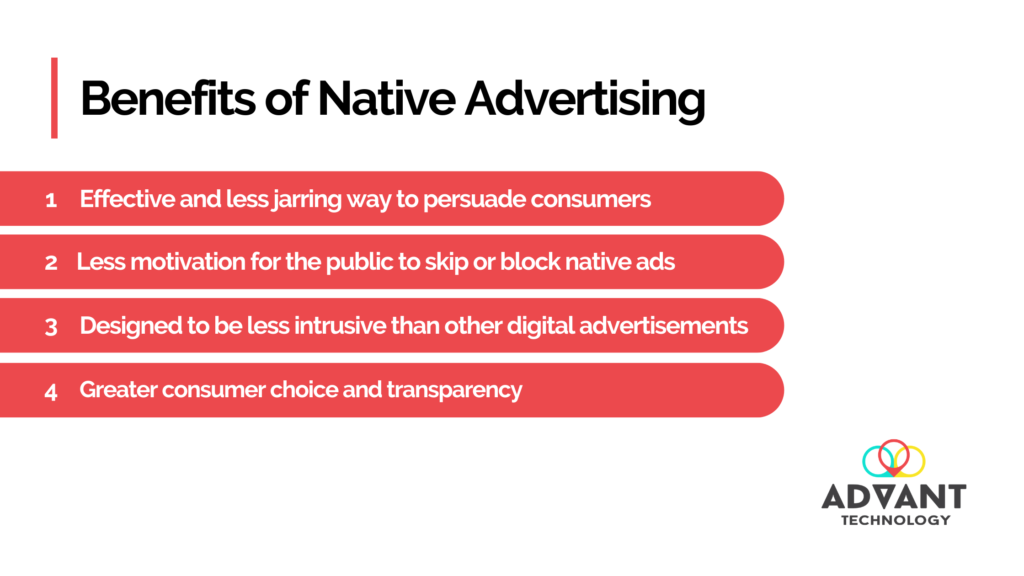
They are designed to be more engaging than other forms of marketing. They may result in greater levels of brand awareness and engagement. Still, it’s essential advertisers recognise content should be clearly labelled.

There are many reasons for the increasing popularity:

  • It is efficient at targeting users who are likely to be interested in the advertised product or service. It can provide an effective and less jarring way to persuade consumers of a product or service benefit.
  • There is less motivation for the public to skip or block native ads than more invasive and forced ads. Forced ads, such as pre-roll video advertisements, are often considered annoying.
  • They are designed to be less intrusive than other digital advertisements because they attempt to blend in with the surroundings in which they appear. As a result, users may find them less frustrating and more relevant than other forms of digital advertising.
  • They enable greater consumer choice and transparency, native advertising may help to build trust.
    Now, let’s dive into ethics which is the crux of this content.

Examples of native ads

madeformums.com - Native Advertising Example - Advant Technology

Ethical native advertising

Ensuring audiences are aware that native ads exist is an integral part of protecting trust, transparency and honesty. This is especially true when advertising on journalistic sites such as news publishers.

Web users need to be informed and understand the difference between paid-for content and impartial recommendations or opinions, so a clear label is critical if you’re a publisher.

There are also concerns about ‘advertorials’—ads that masquerade as independent articles.

While such ads may be labelled as advertising, they are designed to look like legitimate content; thus, a conflict of interest is at play. Advertorials are also sometimes called branded content.

So, is native advertising ethical?

That depends, but our answer to that is, yes, as long as they conform to the necessary regulations ensuring it is clearly labelled.

The advertising industry needs to be held accountable. It must ensure that all the stakeholders within the supply chain of the delivery of native ads are doing their bit. Those stakeholders include:

  • The advertiser
  • The tech platforms including SSPs, DSPs and exchanges
  • The publishers

This lack of transparency is a primary source of frustration, with users often labelling native ads as ‘deceptive’.

Marketers that seek to advertise their products through native should ensure they are transparent about their affiliations.

Types of native advertising / native ad units

  • Paid Search Unit
    These types of placements/units are search results. They are commonly highlighted in different colours. They are positioned at the top of the page before other search results on search engines like Google, Yahoo, or Bing.
  • In-Feed Unit
    These advertisements appear in the middle of social media or editorial content on platforms such as BuzzFeed and Facebook.
  • In-ad with Native Element Units
    These advertisements contain content meant to look like the editorial content around it.
  • Promoted Listings
    These advertisements are product listings that might appear on search pages and shopping websites. They are promoted by sellers such as Google or Amazon.

Ethical questions stakeholders should ask themselves

  • Transparency and honesty – Is it clear to the consumer?
  • Are labels easily visible?
  • Is it possible for consumers to differentiate between an advertisement and other content?
  • Editorial independence – Does the website or social media platform publishing native ads operate independently from advertisers?
  • Interference – Are marketers seeking to interfere with consumers’ website use?

The future of ethical ads

While native advertising has been successful in the short term, it may be necessary for further improvements in transparency and ethical standards to remain effective long term.

Marketers should continue to work collaboratively with news websites and the ad-tech industry to promote accurate and ethical native advertising standards.

Conclusion

In summary, native advertising can be a powerful tool in the hands of marketers who are transparent and ethical. It is crucial to consider how your customers will react to it before using this form of marketing strategy for your business.

Suppose you need help planning an ethical campaign? Our international media experts can help strategise the best approach to ensuring trust and safety for your digital advertising campaigns.

Free Paid Media Review

We are a world-class programmatic marketing agency that can generate more sales and leads for you. Leave your email address, we will contact you for your free paid media review.

Categories
Blog Guide

CBD Digital Advertising Guide

CBD Digital Advertising Guide

How to Market CBD Products Compliantly in 2025.

This guide will help you with your marketing strategy if you are an online CBD business. We take you through advertising restrictions from prominent digital advertising and social media platforms.

The CBD market in Europe is growing as consumer acceptance of CBD products increases.

CBD is experiencing exceptional interest across the world. According to the Brightfield Company, worldwide CBD sales are predicted to rise by 400% during the next four years in Europe alone.

According to Roy Bingham, the cannabis industry is expected to be worth $24 billion dollars by 2021, the co-founder and chairman of BDSA.

Cannabis advertising is changing and those changes are here to stay. You see, CBD is found in many different industries, including pharmaceuticals, personal care, cosmetics, and nutraceuticals. It comes in the form of edibles, CBD oils and sprays.

There is a boom in CBD brands and naturally, this is going to attract marketing talent. The US, as is often the case, is ahead of the curve when it comes to CBD advertising, but that does not need to be the case.

Many brands use organic marketing techniques (i.e. no paid advertising), such as social media and SEO, these are both great in attracting your audience, and while organic is an important component of any marketing mix, paid media messaging plays an equal role, and we have seen excellent ROIs with online paid media advertising.

This article mostly focuses on paid advertising since this is what Advant Technology specialises in.

We think the best route for paid marketing of CBD products is through programmatic, it’s ahead of the curve, and the CBD industry needs to get on board as it enables CBD and Cannabis ads in a more open way with fewer advertising restrictions.

What is programmatic advertising?

Programmatic is a form of online digital advertising. It can include display ads that appear on mainstream websites or even audio advertising for brand awareness campaigns.

Today you can even buy connected TV ads via programmatic.

Let’s look at the more technical explanation of what programmatic advertising is.

What is programmatic advertising

The goal is to deliver ads that are more relevant and effective than those placed on sites using traditional methods of buying online ad space.

This article applies to both programmatic advertising in Europe and the US.

The Basics

What is CBD?

CBD is one of the most common compounds found in cannabis and hemp leaves. It accounts for up to 40% of the plant’s extract and by itself, it apparently does not cause a “high” like THC but has its own benefits, as we will see shortly.

The list of conditions that can be treated with CBD is growing rapidly. So far, CBD has shown potential in the treatment of anxiety disorders, insomnia, arthritis, pain relief and many others.

This non-psychoactive compound may also decrease the symptoms of certain conditions such as Parkinson’s disease and multiple sclerosis. The list is not conclusive at this point, but more research is being done.

Why has CBD gained popularity recently?

CBD has become popular because people are looking for natural remedies. CBD is one of the most versatile compounds found in cannabis. The list of conditions it treats, as mentioned above, is growing rapidly. That’s why CBD products are becoming more popular.

However, the main reason behind the growth of CBD popularity is the fact that it’s legal in many countries. Marijuana or cannabis with high levels of THC are still illegal in many parts of the world.

CBD is widely available on the market because it can be made from hemp, which contains only trace amounts of THC. This has allowed CBD to become one of the biggest selling products in the US.

What is Cannabis?

Cannabis (Cannabis sativa), popularly known as marijuana, is a plant that produces three different products: the leaves and flowers that can be smoked; the stems and seeds that can be used to make hemp fibre; and the oil from seeds which is used in cooking. Of all these products, it is usually smoked dried leaves and flowers that are called marijuana.

Cannabis is indigenous to Central Asia but grows in most parts of the world today. A hemp plant can reach a height of six metres, with palm-like leaves up to five or six feet long.

Cannabis is slowly being decriminalised in many parts of the world.

Does programmatic advertising have restrictions on CBD & cannabis advertising?

Programmatic platforms are important for cannabis and CBD businesses because they help people who want to advertise their products. But there are other ways to advertise that can open up inventory on mainstream news and entertainment sites.

Digital ads that you see online are mostly bought programmatically. Some 85% of display ads will be bought via ad tech platforms. If you are advertising cannabis or CBD, make sure to use a programmatic system for your ad buying!

Programmatic systems are important for CBD & cannabis advertisers because they help people who want to advertise their products.

These types of ads allow businesses to engage with the right audience through the simplest, most efficient digital marketing channels. But there are other ways to advertise that can open up inventory on mainstream news and entertainment sites.

What are programmatic CBD ads?

These are advertisements related to the promotion of CBD products.

OK, so what problem does programmatic solve?

Programmatic ads effectively reach target markets, and -programmatic media buying offers advertisers the ability to micro-target audiences based on their personal data, making it easier to reach a certain demographic without spending a fortune on ads.
So we know that programmatic can offer an alternative to social media platforms, but let’s take a deep dive into the policies of major advertising platforms and social media. Despite the fact that this area of business seems to be legal and profitable, most social networks have either restricted or continue to disallow CBD advertising. We did a lot of research on online advertising avenues. Here’s what we found.

Pinterest CBD Policy

Pinterest says:

We will allow ads for topical hemp seed oil products that contain negligible amounts of THC and no CBD and make no therapeutic or medicinal claims.

Taboola CBD Policy

The advertising of cannabinoids (CBD’s) is restricted.
Campaigns advertising the sale of CBD products need to comply with the following policies:

Facebook CBD Policy

Facebook has an increasingly older audience. Normally for eCommerce and performance campaigns, Facebook is an incredible platform for generating a positive ROI. The success of Facebook as a marketing tool is due to two things: its ability to attract a huge audience and its micro-targeting capabilities. In short, their policy can be summarised in this sentence.

We don’t allow people to promote CBD or ingestible hemp on Facebook. The update to non-ingestible hemp was made months ago.

Google CBD Policy

Google has several advertising solutions/channels including:

Google has strict policies regarding CBD advertising. Currently, Google Ads does not allow the promotion of CBD products, including ingestible or topical CBD. However, hemp-derived products with negligible THC content (below 0.3%) may be eligible for advertising, provided they comply with local laws and Google’s ad policies.

Advertisers must undergo a third-party certification process to run ads related to non-ingestible hemp-derived CBD products. Even with approval, advertisers must avoid making health claims or promoting products as therapeutic remedies. Compliance with both federal and state regulations is mandatory for ad approval.

For the latest updates, check Google’s official policy page or consult their support team for guidance.

Snapchat CBD Policy

Snapchat is a way to reach young people if you want to sell CBD products. It has the largest market for CBD products that are for people under the age of 30.

Snapchat does specifically refer to CBD or cannabis-related products; however, what we can establish is that Snapchat is not a good place for marketing edible CBD products, including gummies and supplements.

They also don’t allow smoking and vaping. You should not mention any health benefits in the ad creative or the landing page.

In these ads, you can have fun. But make sure that the ad meets the requirements. You should show lifestyle images to connect with people and make them memorable. You can mention CBD or hemp in your ad as long as you specify that it does not have THC in it, so you will be approved by the platform.

OK, so know that we know most of the key social media and native advertising platforms don’t allow CBD ads, let’s get back to programmatic.

How to run CBD-compliant ads

First off, you must ensure you comply with the local laws in your country; typically, that means using data overlaid on the campaign, so you only reach 18+ audiences, + make sure you comply with other messaging rules and regulations.
You should look at both national and state laws. Dispensaries, for example, may want to geo-target their ads.
All states have rules about how you can market and advertise cannabis. You should know that there are some broad guidelines that apply to all of these states, which you should follow when making your ad.

  • Ensure nothing appeals to children e.g. the use of cartoons
  • Do not make claims to health benefits
  • Do not make false statements or misleading claims
  • You are not allowed to show product consumption
  • Do not use any testimonials or endorsements from celebrities or individuals or companies/organisations
  • Do not make reference to your competitors
  •  There must be a for adult use only label
  • Do not use pricing promotions

What are the US state laws regarding Cannabis advertising?

In some states, you must include a disclaimer about your cannabis ad. For more information, see this CBD article.

What ad formats can I run through a programmatic DSP for my CBD marketing?

Here is a shortlist of the advertising formats you run through a demand-side platform:

  • Banner CBD Ads – Static and video.
  • Ads usually appear at the top or bottom of a web page, sometimes both.
  • Interstitial CBD Ads – Video only
  • Rich Media Ads- Interactive experiences like games, offers, 3-D experiences etc.
  • Mobile CBD Ad Units – These are housed in mobile apps so the inventory is plenty.
  • Native CBD Ads – Content ads that look like organic content (blogs, news site etc.)
  • Video CBD Ads – Normally up to 30 seconds like but up to 15secs on mobile works best
  • Audio CBD Ads – Great for getting your brand heard in music apps and podcasts.
  • Connected CBD TV Advertising – Up and coming, big screen, very effective at telling your brand story.

CBD Web Landing pages

Like any e-commerce company, you want to ensure your landing pages are well optimised to increase conversion rate. There are many CBD businesses that have done a great job at streamlining the user journey. Do your competitive research, learn from what they are doing but don’t copy.

What targeting tactics can I use when targeting my CBD ads?

Here we explore some targeting techniques related to programmatic advertising:

1. Re-Targeting, re-target users who visited you
2. Geo-Fencing, very important so you do not advertise in a state or county that disallows CBD ads
3. Contextual Targeting
4. Lookalike Targeting
5. In-Market Targeting, only relevant if your item appeals to those demographics or psychographics
6. Behavioral Targeting, as the name implies, this technique focuses on targeting people who behave as you would expect for your market
7. Affinity targeting, related to your fan base. You create a page or group and market towards those specifically interested in your creation
8. Demographic Targeting, for instance, do not attempt to sell a grilled cheese sandwich at a hip-hop concert
9. Interest Targeting, similar to affinity targeting
10. Keyword Targeting, very important for Google Adwords
11. Topic Targeting, use this technique to target psychological groups or similar interests. For instance, you are selling a CBD product targeted toward people with insomnia you can target insomnia related topics from across the web.

Targeting is very important to your online advertising campaign. With all of these targeting options available, it’s easy to start getting very specific about your demographic and tailor your ads directly towards them. The trick is picking the right ones, so you are not wasting time and money instead in selling your CBD product.

Conclusion

CBD advertising is a new frontier for many companies. So much so that even Google Adwords does not allow CBD ads yet.

While the industry matures, there are plenty of options available to CBD businesses looking to advertise their brand.

Programmatic DSPs are an exciting way to target your CBD marketing campaigns across multiple channels at scale. Here are some helpful tips on how you can participate in this evolving market:

  • Only use reputable ad networks or partners
  • Have your ads approved by the network first
  • Commit to building great landing pages with clear calls to action
  • There are too many people out there pushing bad practices, do what you can to avoid them.
By leveraging programmatic advertising, following compliance guidelines, and using advanced targeting tactics, CBD businesses can successfully reach their audience while navigating complex advertising restrictions. Ready to elevate your CBD advertising strategy? Start with our programmatic solutions today!

Free Paid Media Review

We are a world-class programmatic marketing agency that can generate more sales and leads for you. Leave your email address, we will contact you for your free paid media review.

Categories
Blog Display banners

What’s the difference between HTML5 (animated) & Static Banner Advertising?

Battle of the Banners: HTML5 vs Static Banners Ads

HTML5 Banner Ads vs Static Banner Ads - Programmatic Advertising 101 - Advant Technology
HTML5 Banner Ads vs Static Banner Ads – Programmatic Advertising 101 – Advant Technology

As the world of technology takes off to new heights, online advertising is becoming increasingly competitive and diverse. Today, we take you through the difference between HTML5 & static banner advertising.

Banner ads have been around since the internet’s early days, and static ads were in line with the online speeds the tech could handle. With modern tech like 5G and faster internet speeds, animated display ads bring banners into the 21st century.
So, which banner is best? Depending on your goal, both static and HTML5 could be right for you. You need to think about three things:

1. Campaign objective – what do you want to achieve? Are you looking for brand awareness or performance advertising?

2. Message – What is the message you want to convey?

3. Budget – How much do you want to spend on your ad campaign?

Top 5 Benefits to HTML5 - Why use HTML5 instead of Static Ads - Advertising 101 - Advant Technology
Top 5 Benefits to HTML5 – Why use HTML5 instead of Static Ads – Advertising 101 – Advant Technology

Why use a static banner ad?

Static, sometimes known as image ads, offer the chance to get a quick and simple message across, which can fit your objective if it’s a clear and concise one. They also allow you to do this without taking your whole budget.

Displaying just one image, their simplicity and lack of animation keep costs low as less time is needed to create them.

Animation is not always the answer. Depending on the placement of the ad, a user might only catch the end of the animation as they scroll down to it. If you have a capturing image and simple message, then a static ad could work a treat in prepping for this problem.

If you’ve created several banners, it may be worth trying out different configurations to see which one performs best. This will depend on factors like the layout, colours and message.

Turning your static ads into an image gallery or collage can also help keep costs down while giving you more creative freedom.

What is Dynamic Ad - HTML5 Banner Ads - Advertising 101 - Advant Technology
What is Dynamic Ad – HTML5 Banner Ads – Advertising 101 – Advant Technology

Why use an HTML5 animated banner ad?

HTML banner ads offer a more engaging user experience to display sound and motion. As they’re animated, they usually prevent people from scrolling past the advert without stopping – meaning that your message is seen by a higher number of viewers.

As we all know, it takes time and resources to animate an advert and achieve high levels, but you pay for what you get. This type of ad also allows the advertiser to create an interactive experience with the user – changing images, adding video clips and sound.

Static worked before, so why should I now choose an HTML5 animated ad? A significant drawback to static banners is their single frame giving limited options to let you get creative. As attention spans shrink, this creativity is crucial.

HTML code has overtaken the previous GIF and Flash formats to give even more fantastic options for your creativity through animation, images, and more. This step-up provides native support in all browsers, faster loading, and smoother animation.

This harmony makes for an overall improved user experience that seems more natural and grabs user attention in those vital first few seconds.

HTML5 banners also allow the advertiser to track their success. Data can be collected through tools such as Google Analytics to help understand what works and what doesn’t, resulting in more informed decisions on future campaigns.

The battle between HTML5 vs static banner ads is still raging as technology advances, and we become more creative with our online ad strategies. Using a bit of both will ensure you get the best results.

HTML5 Ads vs Static Banner Ads - Why use HTML5 Ads - Why use Static Banner Ads - Advant Technology
HTML5 Ads vs Static Banner Ads – Why use HTML5 Ads – Why use Static Banner Ads – Advant Technology

Top 5 benefits to HTML5 include:

  1. Eye-Catching
  2. Informative
  3. Interactive
  4. Multi-Device
  5. Easy Optimisation

Eye-Catching

As mentioned, a great campaign creative is now even more key in keeping up to 70% of your audience in the opening seconds.
With the option for animation, movement and colours combine to draw the eye to the ad natively. Movement in itself increases the chance of passing the ‘blink test’, which in advertising looks at how effective something is at catching the audience’s attention.

Informative

Where static ads are limited by size, they tend to cram in much information.

Instead, HTML5 ads utilise many frames, letting you creatively place more information with changing fonts, sizes, colours, and animations.

Interactive

Animation brings a new opportunity for interaction, as HTML5 ads improve click-through and allow users to use the ad almost as a mini web page.
For example, by clicking with arrows that choose between colour, product, or whatever you’re interested in promoting, a user can get engaged by doing more than just reading.

Multi-Device

Gone in a Flash. Flash script is dead, along with the need to have extra plugins. Instead, HTML5 requires no third-party plugins to view animations and allows the same ad to adapt to different screens, no matter the size.
This is more important than ever as we quickly switch between device and platform, hopping from desktop to tablet in a heartbeat. Everyone has their own preference, and many people use multiple devices simultaneously.

Easy Optimisation

Trends can crumble as quickly as they take off in the online world. Being able to update your ads easily keep them on the ball and dynamic enough to adapt to a quickly changing environment.

So, what’s the difference between HTML5 banner ads and static, and which should I choose?

The above outlines that it depends on budget, message, and placement. A static ad could give you the simplicity needed for its success and avoid some problems with HTML5 banners.

However, it looks like the future of online programmatic advertising is moving towards the creative powers of HTML5.

The smooth tech of HTML5 glides between devices and platforms, allows animation to give even more creativity, provides even more information, engages like never before, and can be kept up to date with ease. Features that static could only dream of, so you should consider it worth the extra buck.

What is rich media?

Sometimes html5 ads can be confused with rich media, let’s define.

RICH MEDIA: a marketing medium that features video or sound and is interactive. The user participates in the media presentation. Rich media can be either Interactive (browser-based) or Download-based (stand-alone).

The most popular programmatic display ad sizes in order are:

  1. 300×250
  2. 320×50
  3. 300×600
  4. 728×90
  5.  160×600
  6. 300×600
  7. 970×250

Note that banner sizes will vary by platform and market and ultimately depend on the publishers you want to target.

What is a dynamic creative?

A dynamic ad is an HTML5 banner that can serve multiple creative elements to address all types of audience interactions, such as click-through, hover-over, expand and more.

It allows you to be more relevant with your audience by serving the right message at the right moment. The ad creative should have multiple creative elements that adapt based on the target audience, e.g. different colours, messages and products.

Why use dynamic ads?

There are two key reasons:

  • Dynamic creative is more relevant and creates a better user experience.
  • Allows advertisers to control and automate their display campaigns and save time and money in the process.

Where can I find display guideline specifications for programmatic DSPs?

Your agency will help with the exact ad specs, but here is a pretty good reference from Google.

How does an HTML5 banner ad work on different platforms?

HTML5 ads can be rendered on any platform, including mobile, tablet, website or app. Because HTML5 ads are rendered in real-time, they can adapt to different formats required by the publishing platform. This flexibility allows advertisers to have one ad delivered across multiple devices and screens with optimum performance measured at both pixel level and device level.

Are static ads better for lower-funnel activity?

Generally speaking, if there is a place for this format, it’s at the bottom of the user journey where we are trying to convert the user.

Which format will deliver a better CTR / Click-Through Rate?

Most likely HTML5 as they are more eye-catching, this is certainly what Advant Technology sees in its campaigns.

Conclusion

Now you know why animated ads have gained in popularity over the years! Need help with your next programmatic display advertising campaign? Contact us today for expert guidance and tailored solutions.

Free Paid Media Review

We are a world-class programmatic marketing agency that can generate more sales and leads for you. Leave your email address, we will contact you for your free paid media review.

Categories
B2B Media Buying & Planning Programmatic

New Programmatic Agency? What You Need To Know

New Programmatic Agency? What You Need To Know

Hello digital marketer!

So you’ve decided to move a new programmatic agency. Congrats! We tell you what you need to know to make onboarding smoother for everyone.

If you are looking for a new agency to handle your programmatic advertising, this article is for you. We have created an in-depth guide on how to prepare yourself and your team with all the information they need to start working with a new agency.

This will help make the transition as smooth as possible.

By reading this article, you will understand what steps need to be taken to make sure that both parties are ready for programmatic advertising together.

An exciting time for your business; we hope that you are ready for the opportunities that lie ahead of you.

Processes

The first step in this process is client/agency onboarding, which means preparing yourself and your team with all the information they need to start working with a new agency.

Expert Opinion

This article has been created by the team at Advant Technology and being a programmatic agency themselves, they have first-hand experience onboarding many new clients every year.

Advant Technology works with many agencies; creative agencies, SEO agencies, PR agencies etc, not only brand/advertisers/clients directly.

This article’s information comes from expert opinion through many years of experience working with other agencies and brands/clients/advertisers.

Today, the team shares what they think you need to know when you begin working with the new agency of choice.

Advant_Technology_Programmatic

Factors affecting the scope of the onboarding

Naturally, every agency will have its own idea of onboarding clients, which will depend on the project’s scope. The things that are likely to affect the onboarding process are:

• Total budget – a bigger advertising budget will typically mean a more holistic onboarding process
• Timeframe – an always-on and long term contract/agreement will result in a more comprehensive onboarding
• Scope – the more extensive the scope is, the more critical it will be to have a comprehensive strategy
• The total number of ad formats required
• The goals and objectives of the programmatic campaign
• The number of ad creatives
• The size of the team required to support and facilitate the media plan
• Ad inventory – whether it will be open RTB exchange inventory, PMP or programmatic guarantee deals or a hybrid of all three deal types
• The number of DSPs (demand-side platform)
• Market research
Audience targeting research
• Data plan – depending on the size of your data plan, you may need to find a DMP (data management platform) that matches it
• Location targeting research
• Device segmentation and match rate research – audience matching can be done using cookies or device IDs
• Demographic & psychographic profiles CRM list segments available for matching against audiences
• Compatibility with existing audience data
• Existing ad technology stack
• Types of creatives and ad tags available for insertion
• Analytics – types, platforms, integrations with existing infrastructure etc.

As we’ve discussed, onboarding is just the first step, but to understand onboarding better, let’s look at that from a bigger picture view so you can see what comes after client onboarding.

Programmatic Agency Onboarding Process
Advant Technology's proprietary approach, developed for our one of clients, Destination Canada in which we managed end-to-end planning and buying.

Marketing Goals and Campaign Objectives

Goals and objectives need to be defined before onboarding a client to understand the scope of what will be required to achieve those goals and objectives. There is a difference between goals and objectives. Let’s establish what you should be looking at at this stage.

Remember: Objectives should be measurable and actionable.

Goals can be unmeasurable, while objectives should have a specific structure to ensure they’re attainable and trackable.

For example, a goal could be to increase brand awareness among our target audience.
On the other hand, an objective would be to sell 100 units in 30 days at $50 each.

This type of objective is much more specific and actionable because it’s measurable and timebound.
Advant Technology likes to use SMART objectives as a framework

SMART objectives are:

Specific: what the desired result should be and measure whether this has been achieved in your campaign. It also makes it easier for everyone involved in carrying out the digital advertising campaign to know what the team should do.

– Measurable: a number attached so you can measure your progress throughout the campaign. You will not be able to assess whether or not your digital advertising strategy was successful unless there are measurable results at the end of the campaign.

– Achievable: it is vital to set an achievable objective.

– Relevant: Choose a relevant goal so there can be a direct correlation between what you are trying to achieve through digital advertising and the objectives that need to be defined at the beginning of this process.

– Timebound: an objective must be timebound because it is the only way to know that you have achieved your goal. This also makes it easier for everyone involved in carrying out the campaign (the agency and client, for example) to follow up on progress throughout this process.

Audience Insights / Research and Education

A process whereby the agency asks detailed questions about your market, your product/service, and the audience you are trying to reach. Thorough audience research is vital before the agency defines a strategy in reaching the target audience.

Know everything you can about your target audience in detail because paid media will not be successful if it does not reach its intended audience.

Programmatic Channel Strategy – Media Planning & Allocation

In this step, the agency will use audience insights from the previous step to plan media allocation and buy digital ads; this is your programmatic strategy. Media planning is a process where we determine placement, timing and budgets for purchasing ad space on various channels.

An agency may start by looking at your budget; how much you have available to spend over what period? Then analyse all relevant first-party data that can help the agency identify which advertising avenues will be most effective in reaching your target market with the message that resonates best based upon their demographics, psychographics etc.

For example, if an insight shows your potential customer base tends to purchase more during certain times of the year, such as Black Friday or specific days like Mothers Day, placing the ads within that timeframe would make sense.

Digital_Media_Plan
Example Digital Media Plan

Partner Strategy

Still part of the media planning stage, but rather than look at the channels, one should be looking at which partners are needed to execute the channel strategy.

Conversations and negotiations with DMPs, DSPs, Ad Exchanges, supply-side platforms or even RTB (real-time bidding) platforms to ensure the strategy is executed correctly. Additionally, it’s time to think of which specific publishers we can engage.

Lastly, reviewing third-party data can be applied inside the programmatic technology of choice to reach a particular audience segment.

Content Production – Brand Positioning / Creative Brief (Digital Advertising Campaign)

A brand positioning makes your company stand out from the competitors in the marketplace; it’s how you want to be perceived by potential customers and align with your marketing message(s). This step is where the agency will start creating ideas for ads that communicate these messages through photography or video, depending upon which platform best fits what needs to communicate.

For example, a pre-roll video ad may need to be different from a YouTube ad to an out-stream ad to an interstitial ad. They are all delivered differently, and thus their length/message may need to differ too.

Content production also spans across the landing pages. The ad’s landing page needs to be compelling and give value to the user. Why should they bother spending time looking at this ad?

The creative brief lets you see all these ideas come together in one document, so everyone involved is clear how it looks, feels, and sounds. Important because if there are any issues with production or timing, you want them sorted early rather than later. It may take longer depending upon each case.

Channel Usage

It involves making sure that everything has been planned out correctly from start to finish, it also ensures that all ad placements (website, mobile apps etc.) have tracking implemented. Hence, we know which platforms/channels are performing most effectively for us – again, data drives our marketing decisions. All assets should be adapted for their various channels.

Digital Channel Planning

Campaign Optimisation

Running a campaign involves lots of campaign optimisation. Progress should be tracked daily, so adjustments to media spend can be made if needed or refine messaging and creative based upon how the target audience responds. Just a few things to consider when are optimising a campaign are:

– The creative used in the ad. Does it match your brand? Is it engaging and exciting enough for people to click on?

– Your target audience, who is seeing these ads, and how often will they see them so you can better understand the performance of each one? Do certain demographics perform well or poorly compared with others? Are there specific times where an ad performs better than others (daytime vs nighttime)?

And what about locations? Do certain regions produce lower engagement rates than other areas such as cities or states within different countries that might be more receptive to this type of advertising, like New York City over small towns in Iowa? All of these factors should be considered.

– The key here is not just optimising within a specific ad but across all of them in order to get maximum results from each one being served at different times throughout the day or week, depending on what works best for your business goals.

Whatever direction you decide to take after reviewing these factors, make sure every decision aligns directly back towards improving performance and growing conversions rather than simply placing ads and hoping for the best.

• Consider removing specific channels that haven’t worked well or even introducing new channels. It might also be worth thinking about swapping out programmatic display for programmatic native or reducing programmatic spend and up-weighting publisher direct activity. There are lots of things that can be done. Some of them can be left to artificial intelligence. Others are more a manual process.

Continued Reporting, Analytics & Insights

Once the campaign has been running for a while, it’s time to take a look at what worked and didn’t work. The client should receive an end result report with clear insights into what worked best with their target audience as well as a section on next steps / future recommendations, including potential ideas for new campaigns based upon learning from prior ones executed within their brand strategy framework.

Marketing plans change over time, and agencies will need to be flexible and nimble in order for them to maximise their effectiveness.

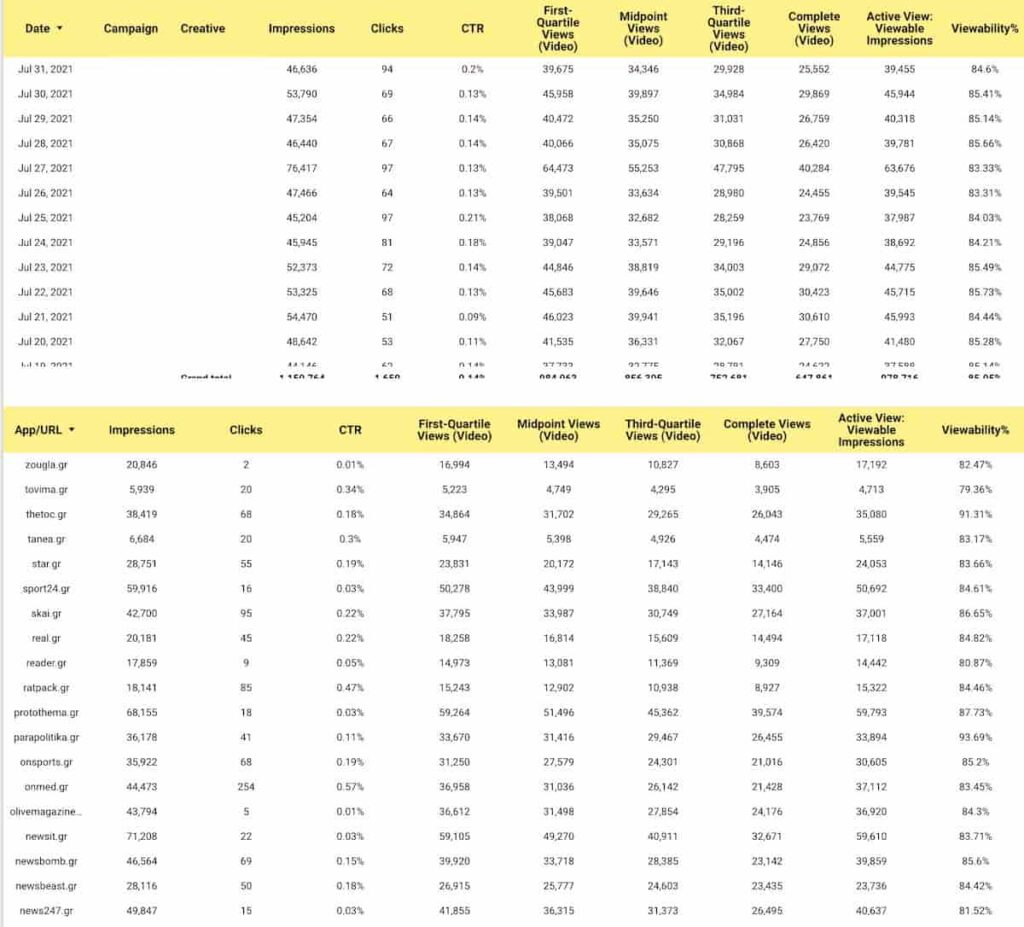
Programmatic Video Report

Programmatic Video Report Showing Viewability, Completion Rate & Domain Reporting

Let’s take a look at other questions you might be asking in anticipation of finding a new programmatic partner. FAQs:

What is the structure of a programmatic ad agency?

Advertising agencies have different structures depending on the type of service they offer, whether that’s programmatic, web design or creative.

Programmatic agencies can vary in size and structure depending on the company, but structures are typically relatively flat, with many client service-focused roles that support programmatic buying. Programmers will also be members of this team as they play an important role in getting creative elements ready for integration into programmatic campaigns. Job functions may include:

• Campaign Managers
• Account Managers
• Ad Operations
• Media Strategist
• Business Director
• Client Services
• Creative Development
• Developer
• Analyst
• Media Planner

What are the benefits of programmatic advertising technology?

Programmatic ad technology has several benefits.

First off, it’s an efficient way to increase your target market by reaching the right audience at scale.
Additionally, programmatic media buying is an excellent way to measure the effectiveness of your ad spend and track KPIs such as conversions and ROI.

The technology allows companies to monitor important metrics like clickthrough rates (CTR) which is how often someone clicks on an ad that appears in their feed or landing page views for ads that direct users to a specific landing page.

Programmatic also has a dark side, with fraud being prevalent in the industry, so make sure you use ad fraud protection.

How should my agency report back to me?

The agency should be able to provide data on the performance of your campaign. They should have access to multiple dashboards that tell you information about impressions, clicks, and conversions. Tracking these elements will help give insight into what works well for a given brand or product and give an idea of where costs are being incurred.

Programmatic agencies should also be able to closely monitor the performance of your ads across different channels, including online display advertising.

Later, this information is fed back into future ad campaigns so that you can see how effective they are in converting users into customers or clients, depending on what it is you’re trying to achieve.

How can an agency make your programmatic advertising more effective?

When an agency runs programmatic campaigns, their goal should be to improve sales, increase brand awareness, and reduce costs. For an agency to achieve this, they need to follow these steps:
-First and foremost, the agency needs to understand the clients’ marketing goals.

-Next, the agency should determine if programmatic is a good fit for your marketing objectives.
– The agency will need to leverage their expertise so ask what level of service they’ll be able to provide, including campaign setup & testing as well as creative development services.

What services does a programmatic ads agency offer?

In a nutshell, they should be able to plan, buy, set up and execute a programmatic media buy, optimise and report back, and in the process, hopefully, return a positive ROI.

How much does a programmatic campaign cost?

The cost of programmatic advertising varies from agency to agency. Some agencies have a minimum spend requirement, while others may require you to commit for an entire campaign or even year, depending on the size and scope of your ad buy.

How do agency traders work?

An agency trader optimises programmatic campaigns; their role typically involves analysing data to ensure that the agency buys media at optimal prices. The trader will also be responsible for reporting on campaign performance and adjusting campaigns accordingly to meet specific agency KPIs, meaning they’ll have regular contact with agency management teams; therefore, traders should communicate effectively, both orally and in written form.

What are programmatic exchanges?

A programmatic exchange is a platform where publishers list their inventory to be purchased by advertisers using automated software platforms or algorithms called ‘smart bids’. So, this allows them to trade advertising space across multiple ad networks without being dependent on just one provider. Advertisers bid against each other for an impression which goes into an auction-style format where the bidder wins.

How do programmatic ad platforms work?

Programmatic advertising technology works by using a system of automated bids to buy ads at the best price. The whole process happens in milliseconds and delivers relevant messages to consumers across many different channels, including social media, mobile apps, audio, TV screens and billboards that are all driven through your chosen agency’s digital strategy.

What does it mean if an agency has a trading desk?

It means an agency has a specific team of programmatic specialists whose job is to buy advertising for its clients.

What does a programmatic analyst do?

They are responsible for running reports to track campaign performance and gather data used in future campaigns.
Should I own the programmatic technology stack?

Advant_Technology_Ad_Stack
Example of An Ad Tech Stack

It’s not always necessary to own programmatic technology, but it does come with benefits. This could be in the form of reduced costs, but your budget will need to be big enough. Generally, most DSPs require a minimum of $100k per month.

Should I leave my existing programmatic agency if I have issues?

Moving agencies is time-intensive, and as we all know, time is money. Try to find a solution first before making the switch.

It’s important to make sure you’re not leaving programmatic advertising before giving it a fair shot. Analyse what isn’t working and speak to other partners. The problem might not be the agency; it could be that programmatic isn’t right for you due to many factors, both macro and micro.

What programmatic agency should I choose?

There’s no shortage of programmatic agencies in today’s landscape. Choose one that will best suit your needs and programmatic approach. Make sure there is a good cultural fit, and they understand your business.

How long should my contract last?

This will depend on the scope of your campaign. You can opt for a long term commitment or just run one-off projects. Long term contracts (one year or more) is a commitment from both sides, from the client side a commitment in spend and from the agency side a commitment they will meet the services expected.

In the first instance, it may be better to run a few campaigns before entering into a long-term agreement.

Wrapping it all up.

Programmatic_agency_word_cloud
Programmatic Agency Process


When you are onboarding a new programmatic agency, be sure to have an open line of communication.

Be clear about your goals and objectives so that the team can set out on the right path from day one. That way, any potential pitfalls or missed opportunities will become apparent early in the process, and both parties will feel confident moving forward together into uncharted territory.

If there is anything our team has learned through our years leading digital marketing teams; its that effective partnerships take time and effort, but they’re worth every minute!
We hope this blog post has been helpful!

If you’re looking for a programmatic agency, we’d love to hear from you.

Free Paid Media Review

We are a world-class programmatic marketing agency that can generate more sales and leads for you. Leave your email address, we will contact you for your free paid media review.

Categories
Blog Programmatic

Better B2B Marketing Using Intent Data in Programmatic Advertising

Better B2B Marketing Using Intent Data in Programmatic Advertising

Intent-Based Marketing - Advertising 101 - Advant Technology
Intent-Based Marketing – Advertising 101 – Advant Technology

Intent targeting represents a profound shift in online advertising, allowing you to target potential accounts/users/customers who are researching specific topics across the web rather than just presenting ads indiscriminately which leads to wasted marketing budget when engaging relevant accounts.

Intent-based advertising is the next step in B2B ABM advertising. Intent data combined with the right messaging is a powerful combo that both marketing and sales teams benefit hugely from.

Marketing teams can successfully use this tactic to generate leads and improve brand awareness from key accounts around particular topics related to your business. The beauty is that they are already researching these topics and showing ‘buying signals’.

As a programmatic agency that helps B2B clients, we know that intent targeting technology helps marketers identify their relevant audiences across multiple marketing channels and deliver a more targeted message. It is a proven method of delivering greater response rates, higher close rates, and a long-term impact on sales revenue growth.

Intent-based programmatic offers an alternative to Google Ads (intent-based searches) or at the very least support your Google Ads campaigns.

So if you’re running any kind of demand generation campaign you’ll want to read this article to learn how to use intent marketing data as part of your account-based marketing strategies and programmatic campaigns.

What is intent-based marketing in digital advertising?

Intent data is the digital information gleaned from a user’s search for information or actions and online behaviour across the web. It provides an insight into what the users’ intents of their searches and activities online are. This valuable data is what is applied when setting up your targeting.

Intent-based marketing - Digital Advertising - Advant Technology
Intent-based marketing – Digital Advertising – Advant Technology

Intent data is the new art of listening.

The average online buyer has already completed most of their buyer journey before finally speaking to a solutions provider. Therefore targeting customers based on their online behaviour/digital footprint such as content consumption will give you an edge when reaching customers.

If you can intercept buyers as they search for product information they can end up in your sales funnels rather than that of your competitors.

Understanding B2B purchase intent to improve sales prospecting

Salespeople are not a free commodity.

The last thing you want is for them to spend their time on low-quality leads. When commercial teams are aligned together, they perform at their best.

Before buying, B2B buyers are increasingly using the web to research, what you as a marketer must do is capture that intent and interest and use it in your campaigns, this leads to highly targeted leads for your sales team and it also improves conversion rate.

What is account-based advertising/marketing?

Account-based marketing (ABM) defines a strategy to exclusively engage high-value leads interested in a specific product or solution. By using personalised, strategic outreach, you can see the clear fit for intent data.

This type of marketing aims at deepening customer relationships across the decision-makers cohort and is typically applied to segments of accounts instead of one individual contact within the account.

Why are intent-based campaigns more effective?

The power of intent-based targeting lies in the ability to connect directly with your audience who are actively looking for your products and services.

Intent targeting engines use machine learning to analyse trillions of data points from tens of thousands of publishers.

The role of intent data in your ABM strategy

Intent data can help marketers to understand B2B buyer behaviour and align their engagement strategy accordingly. It provides actionable insights regarding how prospective accounts are researching and making buying decisions.

This helps marketers to have a more in-depth conversation with the right decision-maker, at the right time which improves sales effectiveness.

By understanding the research and buying process of a prospective account, marketers can map out an engagement strategy that is relevant and personalised for each individual account.

The primary use cases where intent data can be applied to Account-Based Marketing (ABM) include:

– Segmentation: using intent data in account prioritisation & filtering  to determine the weightage of an account in a scorecard

– Sales strategy: helps marketers to focus on the best opportunities within an account

– Lead scoring: using intent data to increase lead score of accounts that have been identified as more valuable by mapping it against their content consumption and intent

What can go wrong with intent data in ABM?

One important factor is to ensure that the data is of high quality, accurate and actionable. Marketers can end up spending a lot of time targeting accounts that would have been low-value customers anyway.

Another challenge is to determine if intent signals from the account are really relevant for the business or if it is just noise.

Some of the intent data might not be relevant for your company or product at all. For the ones that are relevant, it is important to determine which signals provide the best indicators on account behaviour and ultimately buying decisions.

When it comes to account-based marketing, data is crucial. Consider the quality of that data and how much it can tell you about your target consumers.

Where can I activate intent-based data on my marketing campaigns?

The intent data itself is activated in a marketing technology known as a DSP (demand side platform) which your programmatic agency can provide access to.

From here, in order to engage relevant accounts, we must reach them wherever they are spending time, that could be across consumer sites or even social platforms.

B2B Intent Data Myths

Let’s demystify intent data!

Myth: You cannot target using intent data when people are working from home

Just because people are working from home does not mean you cannot use digital display advertising to engage relevant accounts and prospective customers, your ABM program can still leverage intent data.

Bombora Intent data for example is built using a number of data sources

1. IP to business domain match using Bombora technology.

2. Using the data co-op (a tag across thousands of sites) Bombora is able to take registration data and match it to users.

3. Offline databases and registration data sources provide further business domain matches.

The end result is there has been very little data drop-off post-pandemic, so rest assured we can still reach your target accounts.

Myth: I need a big team to use intent data

False, Bombora has done the hard work for us. All we need are the prospective audiences/topics to build the intent data and we can be up and running with a campaign in a few days.

Myth: Intent data costs a lot of money

False. There are no setup fees, it’s a pay-as-you-go model whereby a CPM is charged on top of an advertising campaign. So if you only want to spend a few hundred dollars that’s technically feasible, though not necessarily advisable.

Myth: Intent data breaks consumer privacy rules

False. Intent data from Bombora is collected through a co-op, this data is aggregated from digital footprints collected from users browsing content-rich website publishers researching online. That media consumption is then tracked only when a consumer opts in to have their data collected and analysed.

The B2B buyer journey & intent data

The B2B Buying journey has always been a subject fascinating for marketing professionals. Especially in this modern world where everything is shifting to online and B2B buyers are getting more mobile than ever before, the way they buy has changed significantly. Take a read of the new B2B buyer journey here.

With Bomboras surging target audience data you can choose to what extent they are showing intent, using a scoring system, though a high score does not automatically mean the buyer is at the bottom of the sales funnel.

Never before has it been more important to influence the buyer with quality content from the top through to the bottom of the funnel as sales teams no longer influence the buyer as much as they used to.

Conclusion

If all of this sounds intimidating and you want help enacting these principles in advertising campaigns, let us know. Our teams of experts are ready and waiting to partner with you to create a stellar marketing plan that drives sales by reaching customers based on intent.

Categories
Blog Guide Native

What are native video ads?

A GUIDE TO NATIVE VIDEO ADVERTISING

Mastering Native Video Advertising: Benefits, types and common mistakes 

In a world where consumers’ attention spans are constantly decreasing and more people are using ad blockers, it’s becoming increasingly difficult for brands to get their message across. One of the ad formats that can help bypass this and that we’ve seen brilliant results with here at Advant Technology is native video advertising. Today we thought we’d share our top tips for advertisers and agencies wanting to learn more about these types of ads.

Native Video Ads - Benefits of Native Ads - Advant Technology - Word Cloud
Native Video Ads – Benefits of Native Ads – Advant Technology – Word Cloud

What are native video ads?

Native video advertising integrates branded messages seamlessly into content, aligning with the format of the hosting platform. It’s generally an in-feed video ad that’s uploaded to various platforms targeted to your desired audience.  Many in-feed video ads are click-to-play; meaning they play on their own without sound.

Native Video Advertising - What is Native Ads - Advertising 101 - Advant Technology
Native Video Advertising – What is Native Ads – Advertising 101 – Advant Technology

These types of ads are a form of native advertising that is more immersive than ever before and can be seen on Facebook, Instagram, Twitter, YouTube,  Snapchat, and thousands of other apps and publishers across the globe.  

Native video ads are regarded as “native” because they are formatted mainly for the platform that is hosting them, making them blend in with other content on the platform. They are promotional, can be engaging if done well, and are highly targeted if using the right data which would be applied when setting up your campaign. 

Native advertising has risen to be one of the most influential these days due to its high engagement rate and non-disruptive nature, and many industry experts claim they are the future of advertising.

Benefits of Native Video Advertising - Advertising 101 - Advant Technology
Benefits of Native Video Advertising – Advertising 101 – Advant Technology

Benefits of native video advertising

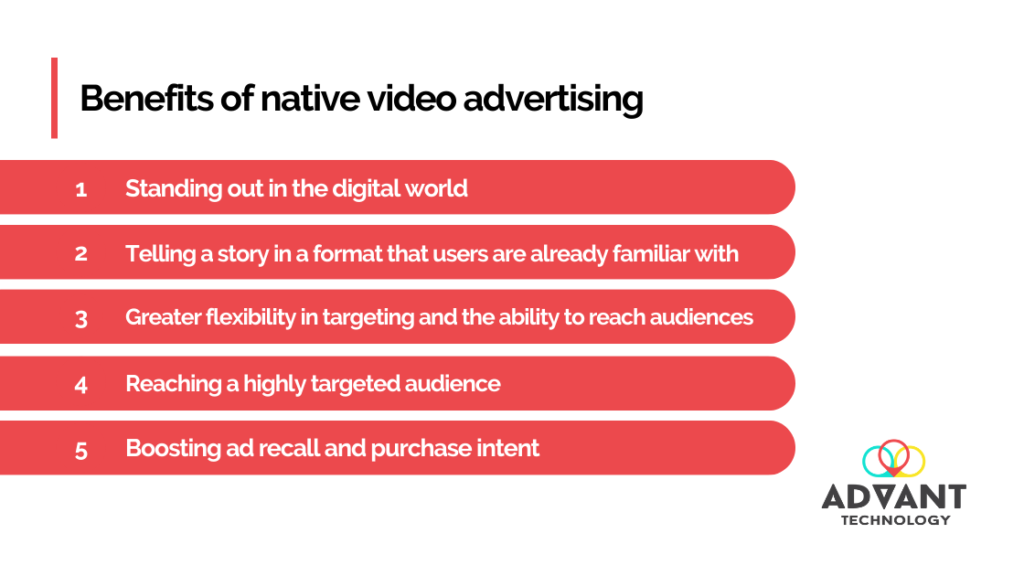
Viewable video advertising is a way to stand out in the digital world and marketers are taking notice. With billions of video views across the web every day, it’s no wonder that advertisers want to take advantage of this trend. This native form of video ads offers a number of benefits including reaching a highly targeted audience. They also boost ad recall and purchase intent.

Businesses of any size can now focus on creating compelling content to reach their target audiences. Native video advertising allows advertisers to tell a story in a format that users are already familiar with and used to engaging with for years. They are especially beneficial for users, as they allow them to engage with related content without disrupting their current tasks.

Native video advertising provides an opportunity to tell a story in the form of text, images, or both, and brands can choose to use captions or voiceovers to convey messages about their products and services.

They allow for greater flexibility in targeting and the ability to reach audiences regardless of their device or platform of choice. Additionally, brands can now use multiple formats to tell personalised stories within one campaign.

Native Videos vs Preroll Videos - Native Video Advertising - Advant Technology
Native Videos vs Preroll Videos – Native Video Advertising – Advant Technology

Native Video vs. Pre-Roll

Pre-roll videos play before the video the user intends to watch and are often auto-play. Sometimes the sound starts playing on its own and sometimes users may need to activate it. Many people think that pre-rolls and native videos are the same, but in many ways, they are different.

Pre-roll video ads act as a barrier to the content that the user wants to see, meaning they have to view the advert before they can continue. Some people consider these short videos disruptive, and some advertisers, such as Nike, avoid them altogether.

Native video advertising is different in the way that it presents the option to just keep scrolling without any interruption or barrier.  It’s an ad that fits the platform it is being viewed on. For example, Tastemade may have a native video ad about food content that only plays when someone watches one of their food channels. This type of video is becoming more prevalent because they are effective for both publishers and users.

Both types of ads aim to increase brand metrics and sales and there is an argument for both types depending on the objectives. We have found success with both formats over the years for our clients in influencing purchasing decisions.

A word on mobile and native ads

Native video ads allow viewers to continue browsing a site without interruption, which is especially useful if they are watching via mobile where changing screens takes effort. In-feed videos allow for maximum visibility on mobile devices, making it an ideal format to take advantage of.

Since users don’t have to stop to watch native ads and because they are not “forced” to watch it, it’s arguably more valuable if you do get a completed video view as it suggests the user choose to watch your ad, meaning you have a better chance of converting the user into a customer.

Native videos are typically published through programmatic channels, resulting in higher completion rates and lower bounce rates compared to direct media buys. Detailed reporting and instant optimizations further enhance their performance, a key advantage offered by Advant Technology.

Common mistakes with native video advertising

Many people make mistakes when trying to optimize native video. Here are the most common native video ads errors: 

  1. Not having a strong call-to-action
  2. Making the copy too long
  3. Ignoring CTAs during editing
  4. Using clickbait and sensational headlines
  5. Making the video too salesy
  6. Not testing colors, images, copy, and length
  7. Not using the right targeting options

Top tips for native video advertising

Focus on one goal at a time

This helps to know whether the placement of a native ad is having a positive impact on business objectives or not. In order to track performance, it’s always good to have one clear KPI in mind and see the results in real-time. For example, don’t try to focus on CTR, view completion rate and sales all at one time, pick one!

Creative storytelling through video is more effective than simply showcasing a product or service

While the purpose of every ad is to shine the light on a product or service, consumers today are exposed to an endless amount of adverts. As a result, creativity plays an important role in grabbing the attention of audiences. For this reason, telling stories through video can create more engagement compared to just “showing off” products or services

Video length should be in line with the sales funnel

If the sales funnel is long, it’s a good idea to have a longer video. For example, when advertising a complex service that requires loads of explaining, then having a short video ad is unlikely to be effective. As the consumer gets closer to the purchase decision, it’s better to have a short video that can quickly illustrate the benefits of your product or service.

Quality content is always a good starting point

Brands should always strive for quality content. No matter what size budget is set aside for native ads, it is important that the script and images are engaging. We have found that a good starting point is to create a video ad made from high-quality images, scripted in no more than three short paragraphs. This ensures the messaging focuses on the brand message and value proposition.

Get the timing right for maximum engagement

Because native ads are contextually targeted, timing is critical to ensure it reaches the right audience at the right time. For this reason, native ads should be used more for communicating brand awareness rather than pushing sales messages.

Look towards programmatic native video ads as a way of reaching a broader audience

A new way for video ads to be targeted is through programmatic technology. Native video ads allow brands to reach a wider audience at scale while ensuring they have a more positive impact on the user experience, resulting in increased engagement.

Optimize for multiple video ad formats

Native video ads need to be optimized for every format available. This means that there should be separate videos made for Instagram, Facebook, and Twitter and various publishers bought through programmatic channels.

If done correctly, this approach will give brands the best opportunity to reach the right audience with the right format.

If you’re going to use a different creative for each platform, then make sure they share similar qualities such as colour schemes and copy. This way it’s not too jarring when you switch from one ad to the next. This is an art and science!

Provide value to users

While video ads work well as a branding and awareness tool, they also need to be targeted toward the end-user and provide them with some form of value. This is why it’s important that native videos are used as a method of adding value to the user, rather than simply using native video as a branding tool.

Why use native video ads - Native advertising - Advertising 101 - Advant Technology
Why use native video ads – Native advertising – Advertising 101 – Advant Technology

Why use native video ads for your advertising strategy?

Here are our top reasons why you should consider using native video ads:

They get a wider reach

When you upload your video ad instead of sharing a link to it, it will prompt social networks to promote the ad more than they would to a YouTube URL link. This is because social platforms have set up the algorithm of their news feed in a way that they give priority to native videos.

They attract attention

Nowadays, social media users are becoming more tech-inclined. As a result, they are beginning to value more discreet forms of advertising. This is the reason brands are now investing more in their display budgets and shifting them into native video ads.

More engagement

Native video ads are likely to create more engagement. The reason is, users who have already been attracted would want to go further to know what the link is about. Video ads are even more accessible to online users as many networks now offer autoplay functionality.

Conclusion

Marketing entails giving your audiences what they want, and today’s audiences want the ability to watch ads conveniently and unobtrusively, which can be made possible with the non-disruptive nature of native ads.

If you are planning a native video campaign, our team of media strategists, campaign managers and programmatic experts would love to help you. Speak to our team today to discuss your goals.


Picture of Ben Myers
Ben Myers
Ben Myers, CEO of Advant Technology. Programmatic advertising expert and all round digital strategist. Globe trotter, food fanatic, cocktail maker, car crazy, that's Ben. London born n bread, it was here where he gritted his teeth in the advertising world starting at Videojug.com and then moving onto Teads where he drove sales, publisher growth and ad operations. A regular speaker at trade events around the globe. Passionate about helping brands achieve their goals through digital advertising.
Categories
Blog Guide

Digital Dictionary

DIGITAL DICTIONARY FROM ADVANT TECHNOLOGY

Digital Dictionary - Online Advertising 101 - Word Cloud - Advant Technology
Digital Dictionary – Online Advertising 101 – Word Cloud – Advant Technology

Welcome to the Advant Technology Advertising Dictionary

A comprehensive list of advertising technology language, aka ad tech lingo. A concise guide to the key terms in the programmatic, PPC and social advertising world. If there is anything on this list you want to learn more about then get in touch now.

Ad blockingAd blocking is the use of apps, browsers, or networks to filter advertising components from being rendered on a consumer’s device. This could include display advertising, tracking pixels or anything that can be predefined and included on a reference black-list. Ad blocking can impact a publisher’s ability to provide free or subsidised content or services.
Ad exchangesOnline, often highly automated auction-based marketplaces that facilitate the buying and selling of inventory across multiple parties ranging from advertisers, direct publishers, ad networks and Demand Side Platforms (DSP). Watch this explanatory video for more on how this works.
Ad ImpressionA metric expressing each time an ad is served and displayed, whether it is seen or not, whether it is clicked on or not.
Ad InventoryThe amount and types of ad space a publisher has available for an advertiser to buy.
Ad OptimisationA means of improving campaign performance through automated and semi-automated means, usually through a systematic approach. Ad optimisation often focuses on cost (especially prices in automated bidding), targeting or creative, gleaning performance improvements through testing.
Ad RotationThe ability to show multiple ads in a single location, varying the treatment displayed on each new page load and/or within a single page load. Ads are generally rotated to either avoid consumer wear-out or as a part of ad optimisation and testing.
Ad ServerTechnology that serves, tracks and optimises online ads for brands across digital publishers. Ad serving companies can help make online advertising more streamlined for brands by serving as a single point of contact across a number of publishers.
Ad TrackingThe method for recording campaign delivery metrics between adservers. Third party adserving tags or 1×1 tracking pixels are commonly used to track this data.
AdblockerA piece of software that can be overlaid within a browser, app environment or operating system by consumers which will filter out requests for advertising to appear within certain digital environments. Some adblockers will also block data calls used for tracking purposes or basic user functionality where a data exchange is necessary such as flight booking systems.
Ads.txtAds.txt is a project designed by IAB tech lab to increase transparency in the programmatic advertising ecosystem. Ads.txt stands for Authorised Digital Sellers and is a simple, flexible and secure method that publishers and distributors can use to publicly declare the companies they authorise to sell their digital inventory. By creating a public record of Authorised Digital Sellers, ads.txt will create greater transparency in the inventory supply chain, and give publishers control over their inventory in the market, making it harder for bad actors to profit from selling counterfeit inventory across the ecosystem. As publishers adopt ads.txt, buyers will be able to more easily identify the Authorised Digital Sellers for a participating publisher, allowing brands to have confidence they are buying authentic publisher inventory.
Advertising networkAlso known as “ad networks,” a company that provides a single point of contact for sales representation for multiple websites by aggregating all the sites’ advertising inventory. Ad networks are used by advertisers, agencies to reach audiences and by publishers, typically to sell remnant inventory.
Affiliate marketingWhen a web site owner or publisher displays an advertisement (such as a promotional link) on its site for a brand or merchant and is paid for the performance of the advertisement, this is known as affiliate marketing. Affiliate marketing activity generates large amounts of online sales in the UK and worldwide.
AggregatorA website or computer application that pulls together information from diverse sources. There are different types of aggregators, in the advertising industry, these notably include content, data, news, social media, and/or video aggregators.
AlgorithmA set of rules established for making a calculation. Online, algorithms are commonly used to determine the listings shown via search engines and for automated methods of ad trading and delivery.
Anchor textThe words forming a text-based hyperlink in web content. In terms of best practice for user experience and for search engine optimisation (SEO), the anchor text should accurately reflect the content users will find if they click on the hyperlink.
AndroidOne of the world’s most widely used mobile operating systems smartphone platforms developed and run by Google. Android is optimised for mobile touchscreens and tablets.
Application Service Provider (ASP)In the past, software was frequently stored on a physical medium and uploaded directly to specific machines. Instead, computer services and software can be hosted by a given vendor, or ASP, and accessed by clients via the internet.
AppsSoftware solutions that allow PCs, smartphones and tablets to perform useful functions beyond the running of the computing device itself.
Artificial Intelligence (A.I)A.I in digital advertising is the use of learning algorithms that adapt user feedback into improving the overall ad experience without the need for further human involvement beyond setting the restrictions of the original algorithm.
ASA (Advertising Standards Authority)The Advertising Standards Authority is the UK’s independent regulator of advertising across all media. It applies the Advertising Codes, which are written by the Committees of Advertising Practice. Their work includes acting on complaints and proactively checking the media to take action against misleading, harmful or offensive advertisements.
AttributionAttribution is the technique used to measure the monetary impact a piece of communication has on real business goals. For example: sales (volume and total), profit, revenue and retention. The application of attribution modelling in digital advertising allows marketers to understand what events (e.g. display ad exposure, active search, search ad exposure, price comparison site) truly influence individuals to convert and thus allocate credit to different formats and tatics within the customer path to purchase. Early attribution models include first-touch and last-touch attribution. Models broadly recognised as more accurate include, but not-only, multi-touch linear, multi-touch time decay and multi-touch algorithm-based.
Attrition RateAlso known as “churn rate,” this can be used to reflect the percentage of consumers who abandon each stage of the purchase process, from exposure to an ad to the point of conversion or, for subscriber-based business models, the percentage of customers who stop using the product or service. This percentage is an important part of evaluating the return on marketing investment and/or customer lifetime value modelling.
AudioThe audible file that may accompany ads. Advertising audio should never play without user-initiation.
Augmented Reality (AR)Augmented reality (AR) is a live direct or indirect view of a physical, real-world environment whose elements are augmented (or supplemented) by computer-generated sensory input such as sound, video, graphics or GPS data
AuthenticationAuthentication is the process of attempting to verify the digital identity of the sender of a communication such as a request to log in. Authentication may also confirm the origin and integrity of data in an electronic form, such as the issuance of a digital certificate to attest to the authenticity of a website. The overall purpose of authentication is to reduce the potential for fraud.
Banner AdAlso known as “display ads”, banner advertisements are a form of graphical ads embedded into a webpage, typically including a combination of static/animated images, text and/or video designed to convey a marketing message and/or cause the user to take an action. Banner dimensions are typically defined by width and height, represented in pixels.
Behavioural RetargetingWhen online ads are displayed on another site (or sites) after a customer has interacted with initial ad-related content.
Behavioural TargetingA form of online marketing that uses advertising technology to target web users based on their previous behaviour. Advertising creative and content can be tailored to be of more relevance to a particular user by capturing their previous decision making behaviour e.g.filling out preferences or visiting certain areas of a site frequently.
Between-the-pageAlso known as “interstitial” ads, between-the-page ad units display as a user navigates from one webpage to the next webpage. The ad appears after the user leaves the initial page, but before the target page displays on the user’s screen. Typically, the ad is self-contained within its own browser window or app environment, but may also appear briefly as an overlay on the target page rather than in its own browser window.
BlacklistA blacklist is a basic access control mechanism that allows through all elements (email addresses, users, passwords, URLs, IP addresses, domain names etc) except those explicitly mentioned. Those items on the list are denied access.
BlockchainBlockchain is a distributed ledger used to record transactions between parties whereby the information contained in each small recorded block are linked together in a historical chain that is saved in multiple locations (public or private) making it almost impossible to tamper with. Records saved within the chain are therefore permanent as long as the storage and processing resources dedicated to seeing the chain continue to exist and information can be encrypted so only certain parties can write or access it. Although a relatively new technology, blockchain has the potential to allow a high degree of transparency in any sequence of transactions such as currency exchanges, contracts, records of ownership or given consent.
BufferingWhen a streaming media player saves portions of file until there is enough information for the file to begin playing.
ButtonA square online advert usually found embedded within a website page.
ByteA unit of digital information in computing and telecommunications that most commonly consists of eight bits. Historically, a byte was the number of bits used to encode a single character of text in a computer and for this reason it is the basic addressable element in many computer architectures.
Cache MemoryUsed to store web pages users have seen already. When users re-visit those pages they load more quickly because they come from the local cache and don’t need to be downloaded over the internet again.
Cached pagesTaking a snapshot of each page visited as the web is crawled. These are stored and used as a backup if the original page is unavailable and to reduce server lag for the browser requesting the page.
Call to Action (CTA)The primary action an advert encourages people to take e.g. how to opt-in, get a discount or buy something on the back of a digital advertising campaign.
CampaignThe time period in which a series of integrated advertising messages (that share a single idea and theme) are executed.
CAPCAP (The Committees of Advertising Practice) writes and maintains the UK Advertising Codes for non-broadcast advertising, which is administered by the Advertising Standards Authority (an equivalent Committee (BCAP) fulfils the same role for broadcast advertising). The CAP Executive and Copy Advice teams also provide advice and guidance on how to create campaigns that comply with the rules. The IAB sites on CAP, representing digital advertising.
Check-insExecuted via a GPS enabled mobile device that allows a user to declare they are at a specific location.
Classified advertisingA form of advertising which is particularly common in newspapers and online which may be sold or distributed free of charge. It is generally grouped under headings classifying the product or service being offered (headings such as Auto, Clothing etc) and is grouped entirely in a distinct section away from display advertising. Display advertising typically contains graphics or other art work and which is more typically distributed throughout a publication adjacent to editorial content.
ClickAn interaction between a website visitor and the browser in which the website visitor uses a device, such as a mouse, to move the cursor (or pointer) to an active area of the screen and then deliberately interacts with that area by clicking a button on their device, triggering an event. In the case of touch-screen devices, the user “clicks” by touching the active area with their finger.
Click fraudClick fraud is a type of fraud that occurs on the Internet in pay-per-click (PPC) online advertising when a person, automated script or computer program imitates a legitimate user of a web browser clicking on an ad, for the purpose of generating a charge per click without having actual interest in the target of the ad’s link.
Click tracking URLThe click tracking URL is generated dynamically by an ad server for the purpose of tracking clicks. A click tracker will record this click data before redirecting to the actual destination/landing URL.
Click-through rate (CTR)Click-through rate, or CTR, is a digital marketing metric that measures the ratio of total impressions (number of times the ad was served) to clicks on the online advert.
Close XA creative control that enables a user to close an ad (remove it from view) or to reduce an expanded panel back to its original size.
Confirmed Opt-inAlso referred to as Double Opt-In.  The process that double-checks the desire to be included on an email list after a primary registration occurs. This is typically managed via an email asking the subscriber to click on a confirmation link, which also serves as a method of positively confirming the validity of the email address.
Content Management Systems or CMSSoftware tools or web services for creating and amending website content. Typically, CMS are browser-based web applications running on a server. All enable users to readily add new pages within an existing page template. One of the most common CMS systems is Drupal.
Content marketingContent marketing is a strategic marketing approach focused on creating and distributing valuable, relevant, and consistent content to attract a clearly-defined audience.
Contextual advertisingAdvertising that is targeted to the content on the webpage and / or locAtion someone is in, at the time of viewing.
ConvergenceA trend in which different hardware devices such as televisions, computers and telephones merge and have similar functions.
Conversion rateMeasure of success of an online ad when compared to the click-through rate. What defines a ‘conversion’ depends on the marketing objective eg: it can be defined as a sale or request to receive more information. For example ten click-throughs might provide one conversion.
ConversionsA descriptor encompassing an end user converting to a paying user or a user that performs an action of some sort.
CookieA cookie is a piece of data that is saved, in a small text file, on a user’s device.
 Cookies were invented to allow publishers, or third parties a publisher works with, to remember information about a browser, e.g. items added to a shopping cart. In digital advertising, cookies are mainly used to record a user’s browsing activity, e.g. sites visited or buttons clicked.
 Cookies can contain all kinds of information, including non-personal data and personal data.
Cost per Acquisition (CPA)Refers to the overall costs associated with acquiring one user. This can be calculated by dividing total marketing costs by total number of new users.
Cost per Action (CPA)A pricing model that only charges advertising on an action being conducted eg. a sale or a form being filled in.
Cost per Click (CPC)The amount paid by an advertiser for a click on their sponsored search listing. See also PPC.
Cost per Mille (CPM) / Cost per Thousand (CPT)Online advertising can be purchased on the basis of what it costs to show the ad to one thousand viewers (CPM). It is a term that has been used in digital marketing as a benchmark to calculate the relative cost of an advertising campaign or an ad message in a given medium. Rather than an absolute cost, CPM estimates the cost per 1,000 views of the ad.
Cost per Thousand Impressions (CTI)The revenue paid to the publisher by the advertiser for every thousand times the ad is shown.
Creative DimensionsMeasured in pixels, the width and height of an ad unit (WxH). The width is always the first dimension listed, followed by the height dimension (i.e. an ad that is 300×250 is 300 pixels wide by 250 pixels high).
CRMCustomer Relationship Management (CRM) is a strategy for managing a company’s relationships and interactions with customers and prospects using data analysis of a customers’ interaction. It may involve an email programme to manage and develop relationships over time.
Cross-device trackingCross-device tracking refers to technology which enables tracking of anonymised users across multiple devices, such as smartphones, tablets and personal computers. Advertisers use this technology to understand the cumulative effect of their marketing activity across multiple different digital touchpoints.
Cross-device trackingCross-device tracking refers to technology which enables tracking of users across multiple devices, such as smartphones, tablets, and personal computers. Advertisers use this technology to understand the cumulative effect of their marketing activity across multiple different digital touchpoints.
Customer profilingUsing data to find out a customer’s specific interests and characteristics which could be used for future targeting.
D.E.A.LD.E.A.L is a recommended approach for publishers to connect with ad blocking consumers through a step-by-step process implimented by the IAB: Detect ad blocking, in order to initiate a conversation, Explain the value exchange that advertising enables, Ask for changed behaviour in order to maintain an equitable exchange, Lift restrictions or Limit access in response to consumer choice.
Data exchangesOnline auction marketplace where advertisers acquire 3rd party data that helps them better reach their target audiences with display.
 Data Exchanges were created as marketplaces where Online Data Providers could sell their data directly to DSPs and Ad Networks. Who Uses: Ad Networks, DSPs.
Data Management Platform (DMP)Platforms that allow advertisers, agencies, publishers and others to control their own first-party audience and campaign data, compare it to third-party audience data, and give the ability to make smarter media buying and campaign planning decisions via behavioural targeting or extending audiences via lookalike modeling.  Advertisers and agencies generally utilise DMPs in order to buy more effectively while publishers typically utilise DMPs in order to segment their audiences and sell more effectively.
Demand-side platform (DSP)An advertising technology platform which allows marketers to manage their online media campaigns by facilitating the buying of auction-based display media and audience data across multiple inventory and data suppliers in a centralised management platform.
Direct Billing APICan be used to customise a purchase process that does not require the user to leave where they are.
DiscrepancyThe difference in campaign reporting numbers for key measurements such as impressions and clicks between multiple adservers.
Display advertisingDisplay advertising is a type of online advertising on web sites. It includes many different formats and contains items such as text, images, video, audio and comes in several physical format sizes.
Double Opt-InRequesting the subscriber to opt-in twice, prior to engaging with the subscriber.
DRMDigital Rights Management is a set of technologies used by publishers and media owners to control access to their digital content. Access can be limited to the number of times a piece of content is accessed from a single machine or user account; the number of times access permissions can be passed on; or the lifespan of a piece of content.
DTSG (Digital Trading Standards Group)The industry successor to IASH, the DTSG is an independent audit of trading practices that suppliers offering extended network traffic beyond single-source premium destinations can sign up to. Suppliers agree to follow the DTSG UK Good Practice Principles and be audited regularly to ensure they are offering brand-safe environments for brands to appear against.
Dwell timeThe amount of a time a user spends on a piece of content on a website. This could include reading an article, watching a video or looking at advertising.
Dynamic ad deliveryThe process by which a uniquely sourced advertisement is delivered, via a campaign management platform, to a publisher’s mobile or web content.
Dynamic Creative OptimisationDynamic Creative Optimisation is a type of automated creative generation where the elements that make up a creative such as the fonts, colors, photographic elements and messaging can be changed within the frame of the creative through constant A/B testing to determine what the optimal combination is.
EASA (European Advertising Standards Alliance)The European Advertising Standards Alliance (EASA) is the European body for national self-regulatory organisations (such as the ASA) and industry associations. It promotes responsible advertising in commercial communications by means of effective self-regulation.
Embedded formatAdvertising formats that are displayed in set spaces on a publisher’s page. See also banners, skyscrapers, button.
European Interactive Digital Advertising Alliance (EDAA)The EDAA administers the EU self-regulatory programme aimed at providing internet users with greater transparency and control over behaviourally targeted advertising. The EDAA Board is made up of advertising trade bodies, including the IAB. The IAB currently chairs the EDAA Board.
Expandable AdsOnline advertising formats that appear on users’ screens on top of web content (and sometimes before web page appears) and frustrate the user experience. It is recommended that expansion be user initiated and have clearly marked close buttons and controls.
Expanded DimenionsThe secondary dimensions of an expanding ad unit (after the ad is expanded). Initial dimensions are fit to the dimensions of the placement. Then, either by auto-play or by user interaction, the ad unit expands to its secondary dimension.
Financial Conduct Authority (FCA)The FCA regulates the financial services industry in the UK. They specifically regulate the marketing of financial products and have produced guidance on financial promotions in social media. The guidance covers character limitations, the use of images, non-intended recipients and consumers forwarding or sharing communications. The guidance is available on the FCA’s website.
FirewallA firewall is a system designed to prevent unauthorised access to or from a private network. You can implement a firewall in either hardware or software form, or a combination of both.
FlashAdobe Flash is a mixed software platform used for production of animations, rich Internet applications, desktop and mobile app and embedded web browser video players.
Freemium ModelA type of business model that works by selling basic services, or a basic downloadable digital product, for free, while charging a premium price for advanced or special features.
Frequency capRestriction on the amount of times a specific visitor is shown a particular advertisement.
GDPRThe EU General Data Protection Regulation (GDPR) is the new legal framework governing the use of personal data across EU markets from 25 May 2018.
Generation YSee term ‘Millenials’
Geo-targetingGeo-targeting is the method of determining the geolocation of a user and delivering different content based on his or her location.
Global Positioning System (GPS)System of satellites, computers and receivers that can determine the latitude and longitude of a person and therefore potentially provide more context and relevance for the content and messaging.
Gold standardThe IAB’s Gold Standard initiative was launched in October 2017 supported by all our Board members. It aims to drive up standards in the industry by committing signatories to:
 1. Reducing ad fraud by implementing ads.txt
 2. Improving digital advertising experiences by adhering to the Coalition for Better Ads principles and the ‘Better Ads Standards’
 3. Increasing brand safety by working with JICWEBS with a view to becoming certified or maintaining certification
 GSM
 Global Standard for Mobiles. The set of standards covering one particular type of mobile phone system.
Hard BouncesEmail non-delivery notifications that are generated as a result of messages being sent to invalid, closed or nonexistent email accounts
Header BiddingHeader Bidding is a process that allows marketers a first-look at inventory that publishers would normally hold back for direct bookings. If the publisher can make a better price selling an impression programmatically then their ad server will make the decision automatically rather than fulfilling direct bookings first.
HitA single request from a web browser for a single item from a web server.
Holding CompanyA parent company that owns other companies’ stocks. Examples include Omnicom, WPP, Interpublic and Publicis Groupe, that each control a large number of different operating agencies across the globe.
Hot SpotA “hot spot” is an area of an ad unit, which when rolled-over/rolled-on by the user’s cursor, such rollover triggers an event (i.e. expand ad).
HTMLHyperText Markup Language, the set of commands used by web browsers to interpret and display page content to users.
HTML5HTML5 is the new rendition of HTML (hypertext markup language) and includes features like video playback and drag-and-drop functionality.
IAB EuropeIAB Europe is the Trade Association representing National IAB’s across Europe to European decision-makers. IAB UK is represented on the Board of IAB Europe.
IAB Tech LabThe IAB Technology Laboratory is an independent, international, research and development consortium charged with producing and helping companies implement global industry technical standards. Comprised of digital publishers and ad technology firms, as well as marketers, agencies, and other companies with interests in the interactive marketing arena, the IAB Tech Lab’s goal is to reduce friction associated with the digital advertising and marketing supply chain, while contributing to the safe and secure growth of the industry. The organisation’s founding member companies include AppNexus, Google, Hearst Magazines Digital Media, PubMatic, Tremor Video, Yahoo, and Yahoo! JAPAN. Established in 2014, the IAB Tech Lab is headquartered in New York City with an office in San Francisco.
IASHEstablished in 2005 (now defunct), IASH was an independent audit conducted on usually blind networks who aggregated supplier inventory and sold it on at a lower cost. Buyers would request IASH-accredited traffic to ensure that their brands were appearing on verified sites appropriate to their brand’s values. IASH was succeeded by the DTSG
ImpressionsMetric for counting the number of times users have viewed a particular element (such as an ad) on a desktop website, mobile website or app or an image embedded within a text message such as a mass-market email.
Instream mobile videoWhen you view video content in a dedicated player and, whilst watching, you are served a video ad within that video content, this is known as instream.
 Instream mobile video comes in 3 formats, both in-app and on mobile web …
 • Pre-roll before content
 • Mid-roll during content
 • Post-roll after video content
 Instream video is generally targeted, and relevant, to the video content it is served against, rather than the page content.
Intelligent Personal Assistant (IPA)An Intelligent Personal Assistant (IPA) is a software agent that can perform tasks or services for an individual. These tasks or services are based on user input, location awareness, and the ability to access information from a variety of online sources (such as setting the clock, weather or traffic conditions, look at the news, stock prices, user schedules, retail prices, etc.) Amazon Alexa is an example of an IPA.
Internet Protocol TV (IPTV)The use of a broadband connection to stream digital television over the internet to subscribed users. IPTV services are classified into groups such as Live Televison, Time shifted media and VOD.
Internet Service Provider (ISP)A company which provides users with the means to connect to the internet.
Interruptive formatsOnline advertising formats that appear on users’ screens on top of web content (and sometimes before web page appears – Prestitial) and frustrate the user experience.
JICWEBSJICWEBS (The Joint Industry Committee for Web Standards in the UK and Ireland) was created by the UK and Ireland media industry to ensure independent development of standards for measuring performance online and benchmarking best practice for online ad trading.
Keyword marketingThe purchase of keywords (or ‘search terms’) by advertisers in search listings.
L.E.A.NThe L.E.A.N principles are an industry initiative to improve the overall quality of the consumer’s experience by focusing on Lighter creative, Encrypted ad calls, Ad Choices supported user feedback and Non-intrusive experiences that don’t rely on tactics such as auto-play or sound-enabled creative. The LEAN principles are intended as guidance for all participants in the production of the digital ecosystem to follow to address the core reasons for installing an ad blocker.
Location Based Services (LBS)A range of services that are provided to mobile subscribers based on the geographical location of their handsets, e.g. local deals and sat nav.
Location InformationInformation that enables a mobile marketer to identify the specific location of a particular wireless device.
LocatorAn advertisement or service through which an advertiser’s bricks and mortar location can be identified based on proximity of the consumer or their preferred location).
Meta-tags/ descriptionsHTML tags that identify the content of a web page for search engines.
MillennialsA term used to refer to the generation born from 1980 until mid 2000’s onward, brought up using digital technology and mass media.
MMS MessageA message sent via a Multimedia Messaging Service that contains multimedia objects.
Mobile AdvertisingAny form of advertising that is communicated to the consumer/target via a handset.
Mobile Messaging ProgrammingMultiple mobile messages, usually delivered as part of a coordinated campaign.
MPEGFile format used to compress and transmit video clips online.
MRAIDMRAID or ‘Mobile Rich Media Ad Interface Definitions’ is the common API (Application Programming Interface) for mobile rich media ads that run in mobile apps. Basically, what it means is that MRAID compliant apps all talk the same creative language where things like ad expansion, ad resizing, and getting access to device functionally such as the accelerometer are concerned. This makes it much easier for developers to create rich media ads that will work across multiple apps. For more info about MRAID see here.
Multiple Purpose Units (MPU)A rectangular online advert. MPU stands for  mid-page unit as it appears mid way down the page.
Native advertisingDigital advertising that works as part of the main content flow of a media owner’s site and, typically, provides audiences with a ‘content experience’. Native ad formats include content curation units, discovery and recommendation units. Some people also describe content marketing such as sponsored or advertising features as native advertising.
Natural search resultsThe ‘natural’ search results that appear in a separate section (usually the main body of the page) to the paid listings. The results listed here have not been paid for and are ranked by the search engine (using spiders or algorithms according to relevancy to the term searched on.
Non-personal data (anonymous data)Non-personal data is any information that falls outside the scope of the General Data Protection Regulation (GDPR). This kind of information is also called anonymous data.
Non-Personally Identifiable Information (Non-PII)Information that may correspond to a particular person, account or profile, but is not sufficient to identify, contact or locate the person.
OBAAcronym for Online Behavioral Advertising. The collection of data from a particular computer or device regarding Web viewing behaviors over time and across non- Affiliate Web sites for the purpose of using such data to predict user preferences or interests in order to deliver advertising to that computer or device based on the preferences or interests inferred from such Web viewing behaviors. Online Behavioral Advertising does not include the activities of First Parties, Ad Delivery or Ad Reporting, or contextual advertising (i.e. advertising based on the content of the Web page being visited, a consumer’s current visit to a Web page, or a search query). Definition from page 10 of the Self-Regulatory Principles for Online Behavioral Advertising:
OBA Self- RegulationDeveloped by leading industry associations to apply consumer-friendly standards to online behavioral advertising across the Internet, the Self-Regulatory Program consists of seven Principles that correspond with the “Self-Regulatory Principles for Online Behavioral Advertising” proposed by the Federal Trade Commission in February 2009 that also address public education and industry accountability issues raised by the Commission. Definition from page 10 of the Self-Regulatory Principles for Online Behavioral Advertising.
Online data providers/data aggregatorThe definition of an “Online Data Provider” is broad and includes a number of players and data types, such as companies like Experian (Financial data), Nielsen (demographics and psychographic data) and OwnerIQ (purchase history). Who Uses: Advertisers and their agencies, Ad Networks, DSPs, Data Exchanges.
Online Video AdvertisingOnline video advertising is any a/v advert watched via the internet. In its basic form, this can be TV ads run online, but adverts are increasingly adapted or created specifically to suit online. Video advertising can be placed before (pre-roll), during (mid-roll) and after (post-roll) video content – as well as ‘outstream’ in socical environments and on content sites.
Open RateThe number of HTML message recipients who opened your email, usually as a percentage of the total number of emails sent.
Opt-inThe process where a subscriber provides explicit consent, after receiving notice form the mobile marketer.
Opt-outThe process where a subscriber revokes consent, after receiving notice from the mobile marketer.
OptimisationProcess of refining an advertising campaign so that it will perform more effectively i.e. extending reach, increasing response rate or creating more awareness.
OTT (Over the Top)Access to premium content through any device that connects to the Internet, often marketed as TV Anywhere/TV Everywhere; offers subscribers the ability to watch programming on any device they own
Out-stream impressionsOut-stream impressions are video ad units unaccompanied by content. While a pre-roll or mid-roll ad requires a publisher’s video to wrap around, an out-stream ad is a video ad unit not tied to any piece of publisher video content.
Page ViewUnit of measure that tracks the number of times a user loads a particular page.
Paid for listingsThe search results list in which advertisers pay to be featured according to the PPC model. This list usually appears in a separate section to the organic search results- usually at the top of the page on the right hand side.
Pay for performance programAlso called Affiliate Marketing, Performance-based, Partner Marketing, CPA, or Associate Program. Any type of revenue sharing program where a publisher receives a commission for generating online activity (e.g. leads or sales) for an advertiser.
Pay per leadThe commission structure where the advertiser pays the publisher a flat fee for each qualified lead (customer) that is referred to the advertiser’s website.
Pay per saleThe commission structure where the advertiser pays a percentage or flat fee to the publisher based on the revenue generated by the sale of a product or service to a visitor who came from a publisher site.
Pay per view (PPV)An ecommerce model that allows media owners to grant consumers access to their programming in return for payment. Micro payments may be used for shorter programming whist feature films may attract larger sums.
Personal dataPersonal data is covered by the General Data Protection Regulation (GDPR) and comprises any information relating to a person who can be directly or indirectly identified in particular by reference to an identifier, including name, identification number, location data or online identifier.
Personally-Identifiable Information (PII)Information that can be used to identify or contact a person, including name, address, telephone number, or email address. Can also include demographics or behavioural data.
PharmingAn illegal method of redirecting traffic from another company’s website (such as a bank) to a fake one designed to look similar in order to steal user details when they try to log in.
PhishingAn illegal method whereby legitimate looking e-mails (appearing to come from a well-known bank, for example) are used in an attempt to source personal information that can be used to steal a user’s identity.
PixelThe smallest unit of measure for graphical elements in digital imagery, used as the standard unit of measure for ad creative (i.e. 300×250 pixels). Pixels may also represent x/y coordinates relevant to a given space, such as the browser window, an application workspace or the user’s computer screen. (See also “Tracking Pixel”)
PodcastingPodcasting involves making an audio file of content that is available to download and stream.
Polite File LoadWithholding a portion of the total ad creative file size (besides any initial file load size) from loading on a page until publisher content has loaded.
Pop-upAny advertising experience where visiting a website in an initial browser window initiates a secondary browser window to deliver an ad impression directly above the initial browser window. These are currently discouraged for desktop web and mobile web experiences due to consumer feedback.
Post-rollThe screening of a video ad after viewing video content.
PPCPay per click. The payment method used on search engines to enable adverts to appear under keyword searches.
Pre-rollThe screening of a video ad before viewing video content.
PrestitialAny advertising that appears before requested content has loaded, blocking the consumer from progressing until either a countdown has elapsed or the duration of an ad experience has been achieved. These are currently discouraged for desktop web and mobile web experiences due to consumer feedback.
ProgrammaticThe buying and selling of online ad inventory through automated methods rather than human actions. This includes but is not limited to Real-Time Bidding (RTB).
Progress BarA video or animation control that shows users the progression of the video or animation in relation to its total duration.
Progressive Load VideoA distribution method for serving video files in which the video file downloads over time into the cache of a user’s computer, much the same way images and other content elements are downloaded.
PublisherA web property providing content for consumers.  Business models range from subscription services to advertising monetisation.
ReachThe number of unique web users potentially seeing a website one or more times in a given time period expressed as a percentage of the total active web population for that period.
Real timeInformation, data or content delivered immediately with no delay in the processing of requests, other than the time necessary for the data to travel over the Internet.
Real-time bidding (RTB)RTB is a protocol that enables the valuation and bidding on individual ad impressions in real time. The buying takes place through online media exchanges – basically media marketplaces – which connect sellers (publishers) and buyers (advertisers).
RelevanceThe likelihood that a given page or content will be of interest or useful to a search engine user for a keyword search.
Rich mediaThe collective name for online advertising formats that use technology to deliver interactive and audio-visual elements to give richer content and a richer experience.
RolloverThe willful pause of the user’s cursor on the target portion of the creative (the “hot spot”), such pause lasting at least one second in duration, before an action may be initiated by the ad (i.e. trigger an expand event, etc.). This one-second pause/delay requirement prevents unwanted, user-initiated actions and false reporting of user engagement.
Run of network (RON)An ad buying option in which ad placements may appear on any pages on sites within an ad network.
Run of site (ROS)An ad buying option in which ad placements may appear on any pages of the target site.
Search engine marketing (SEM)Form of marketing that seeks to promote websites by increasing their visibility in search engine results pages.
SessionThe time spent between a user starting an application, computer or website and logging off or quitting.
Short Message Service (SMS)A messaging system that allows sending messages between devices that consist of short code. Otherwise know as a text message.
Simulcastwatching an existing TV service over the internet at the same time as normal transmission.
Site analyticsThe reporting and analysis of website activity – in particular user behaviour on the site. All websites have a weblog which can be used for this purpose, but other third party software is available for a more sophisticated service.
Site TaggingA tag is a keyword or term assigned to a piece of information. This kind of metadata helps describe an item and allows it to be found again by browsing or searching.
SkyscraperA long, vertical, online advert usually found running down the side of a page in a fixed placement.
Sniffer softwareIdentifies the settings and permissions of a user’s browser to determine compatibility with ad formats and serves an advert they will be able to see/fully interact with.
Social MediaSites, applications and platforms that enable the sharing and generation of user content in real time and enable social networking. Facebook, Instagram & Twitter are examples of social media platforms.
Soft BouncesEmail non-delivery notifications that are generated as a result of emails being sent to active (live) addresses but which are turned away before being delivered.
SpiderAlso known as a bot, robot or crawler. Programs used by a search engine to discover, download and index web content.
Standard Ad UnitsA set of ad specifications for standard image or animated in-page ad units that establish a framework for advertising inventory and webpage design.
StickinessMeasure used to gauge the effectiveness of a site in retaining its users. Usually measured by the duration of the visit.
Streaming mediaCompressed audio/video which plays and downloads at the same time. The user does not have to wait for the whole file to download before it starts playing.
SuperstitialsA form of rich media advertising which allows a TV-like experience on the web. It is fully pre-cached before playing.
Supply-side platform (SSP)An advertising technology platform which represents the suppliers of online ads (Publishers) SSPs give publishers the ability to increase their website advertising revenues by engaging with multiple demand-side channels (Ad Networks, Ad Exchanges and DSP’s) through a single vendor. Who Uses: Publishers.
TargetingVarious criteria to make the delivery of an advertisement more precise (age, geographical location or behavioural cues etc.)
Text AdA static appended text attached to an advertisement.
Third party adservingThe technology used to deliver creative assets from one adserver into another, allowing advertisers to track the performance of the campaigns and recording impressions and clicks amongst other campaign metrics.
TrackingThe ability to assess the performance of an ad campaign.
Tracking PixelA 1×1 pixel-sized transparent image that provides information about an ad’s placement. In many cases, a tracking pixel is used to notify an ad tracking system that either an ad has been served (or not served, in some cases) or that a specific webpage has been accessed. Also knownas: beacon, web beacon, action tag, redirect, etc.
Trading deskAn agency branch trading entity known as the expert operators in their use of new technology.  These entities can be independent or operate within an agency holding company.  This group of people (known as traders) play the day-to-day campaign management role. Who uses:  Agency holding companies, operating agencies, advertisers.
TrafficNumber of visitors who come to a website.
Unique visitorsUnique visitors refers to the number of distinct individuals requesting pages from a website during a given period, regardless of how often they visit. Visits refer to the number of times a site is visited, no matter how many visitors make up those visits.
UserAn anonymous person who uses a web browser to access web content.
User generated content (UGC)Online content created by website users rather than media owners or publishers – either through reviews, blogging, podcasting or posting comments, pictures or video clips.
VASTVAST or ‘Video Ad-Serving Template’ provides a common ad response format for video players that enables video ads to be served on all compliant video players. This means that advertisers don’t need to integrate lots of different ad tags to be able to serve their video across multiple publishers.
Video On Demand (VOD)Allows users to watch what they want, when they want. This can be either ‘pay per view’ or a free service usually funded by advertising. All major broadcasters offer VOD such on platforms such as 40D or BBC iplayer.
ViewabilityViewability is an online advertising metric that aims to determine only impressions that had the opportunity to be seen by users. For example, if an ad is loaded at the bottom of a webpage but a user doesn’t scroll down far enough to see it, that impression would not be deemed viewable. Viewability is not a measure of ad effectiveness.
Viewable impressionsA digital ad that had the opportunity to be seen, sometimes referred to through the traditional print media term of being “above the fold”. The current industry criteria for a standard ad unit to be considered viewable is that 50% of the canvas was within the consumer’s rendered window for a minimum of 1 second – the time required for a consumer to understand that the unit is a piece of advertising. Viewability is not a measure of ad effectiveness.
Virtual reality (VR)Virtual reality or virtual realities (VR), also known as immersive multimedia or computer-simulated reality, is a computer technology that replicates an environment, real or imagined, and simulates a user’s physical presence and environment.
Voice SearchA method to search by speaking, rather than typing which can save time on doing tasks or allow the user to multi task. Intelligent assistants such as Siri and Alexa offer voice activated search results.
VPAIDVPAID or ‘Video Player Ad-Serving Interface Definition’ establishes a common interface between video players and ad units, enabling a rich interactive instream ad experience. The two main areas that VPAID covers are providing consumers a rich ad experience and capturing ad playback and user interaction details.
White-listAn accepted list of contacts to receive email from (and should not be filtered or sent to the trash or spam folder) or a list of websites that ad advertiser will permit their ads to be placed on.
Wi-Fi (Wireless Fidelity)The ability to connect to the internet wirelessly.
Categories
Blog Guide

Looking to Brush Up On Your Advertising Knowledge?

LOOKING TO BRUSH UP ON YOUR ADVERITISING KNOWLEDGE?

 
Platforms to Learn Advertising - Advertising 101 - Advant Technology
Platforms to Learn Advertising – Advertising 101 – Advant Technology

Platforms for Learning Advertising: Advertising 101

Whether you think you know it all, or you’re just getting started, we’ve complied a comprehensive list of resources with some of the best courses, academies, and news outlets related to paid digital advertising.

WTF Digiday

A handy guide with detailed insights into ‘wtf is’ pretty much anything in the world of programmatic, PPC or social media advertising.

Think With Google

Brilliant insights backed by extensive qualitative and quantitative research. The Think With Google series is great as most of the information is backed by case studies. Just don’t forget Google has an agenda – sell more ads and make more money, naturally they’ll only showcase the best results and insights that shines a favourable light on to the products they push.

Facebook IQ

What our team loves about Facebook IQ is how they combine insights across both data and creative. Naturally creative is more important in Facebook & Instagram advertising because by nature the platform is more visual in comparison to Google Ads.

Udemy

Udemy has thousands of hours of excellent footage led by thought leaders in programmatic advertising. Yes, you will have to pay for the courses but as most of them are less than $20 each it’s not a big ask.

Teads
Teads is a global video advertising technology company that reaches 2billion people globally. Our CEO Ben Myers helped drive some of the early phase growth when the company was called Ebuzzing. Famous for the inread format they pretty much coined the term outstream video advertising. They mostly focus on brand advertising but now offer performance advertising solutions too. They have courses on subjects such as responsible advertising, data solutions audience, contextual targeting, traffic acquisition: driving qualified traffic, as well as a host of courses tailored to learning Teads specific tools. Checkout the free Teads academy, an excellent educational programmatic course for media buying traders.

Google Digital Garage
If courses and an academy is your thing and you’re looking to come out with a certificate at the end of it, then look no further than the Google Digital Garage. What we love is that the majority of the courses are free. Certificates look great on your CV, we actually noticed a big uptick of people completing courses like these during the 2019 pandemic lockdowns. You can browse the courses here. Make sure to use the filters and you will find that there is something for everyone, beginner to advanced. You can learn about YouTube Ads, PPC Google Ads and of course the Google Display Network as well as Google DV360. If you need help with any of these platforms reach out to our sales team now.

IAB
The IAB offers a range of courses relating to digital advertising. They are a little more pricey than those mentioned on this page and you may need IAB membership but if you want an accurate, relevant, and detailed course these could be just the thing. Check out this programmatic 360 course for instance, it will give you an overview of programmatic technology, programmatic key players, programmatic ecosystem, programmatic supply and demand side and programmatic investment, priced at $299.00

TTD – The Trade Desk
A demand side platform (DSP) WTF is a demand side platform I hear you ask? Learn more about that here. TTD is a global DSP with advanced enterprise level features and impressive reporting suite. Luckily, the team at TTD have been nice enough to provide a suite of courses and accreditation certificates for practical advice and knowledge relating to programmatic media buying and media trading. Check out:

  • Marketing Foundations which covers basic advertising concepts, audience activation including what is a DMP, PMP deals and campaign success.
  • Data Driven Planning which covers data & identity, measurement and goal setting and driving growth.
  • Trading Essentials which covers data and inventory, forecasting, artificial intelligence, campaigns and ad groups and finally insights and optimisations.

Mediamath
Another course from one the most widely used programmatic DSPs, Mediamath. Mediamath has a particular heritage of working with performance advertisers vs brands. They offer a good selection of courses for beginners to advanced in their academy.
Courses include:

  • Programmatic Advertising essentials – A soft and gentle guide to the basics
  • Programmatic evolution – The ins and outs of how programmatic advertising came to be a $155 billon dollar a year industry.
  • Measurement – A holistic guide to reporting, insights and attribution
  • Supply side – everything you need to know about how an online publisher sells their inventory via an SSP.
  • Programmatic and emerging channels such as connected TV and programmatic audio.

Amazon
Amazon is quickly becoming a leading advertising player up there with the juggernauts of Facebook & Google. If there is anyone who can take them on, it’s Amazon. Amazon saw a 32% revenue increase in Q1 of 2021 alone. Understanding the Amazon advertising platform, how it works, and the different types of ads will stand you in good stead as the platform grows and Jeff Bezos becomes ever wealthier.

ExchangeWire
Exchangewire is led by a good friend of ours, Ciaran O’Kane. Their YouTube channel is a great resource for learning and if you want to stay-up-to-date on data, programmatic media advertising take a look at Exchange Wire.

The following resources are geared to marketing and advertising in general not just digital, so you’ll get news on offline channels including TV, print, outdoor and some PR.

The Drum
Current up to date news on marketing and advertising. We recommend singing up to their newsletter and then adapting your marketing preferences to receive what’s relevant to you.

Campaign Asia
Geared to the Asian Market

Campaign Live
Geared to the UK market

Adweek
Geared to the US market

Kampanje
Geared to the Norwegian market (having featured Advant Technology we thought it should make the list)

Learn Advertising with These Great Tools and Websites - Programmatic Advertising - Advant Technology
Learn Advertising with These Great Tools and Websites – Programmatic Advertising – Advant Technology
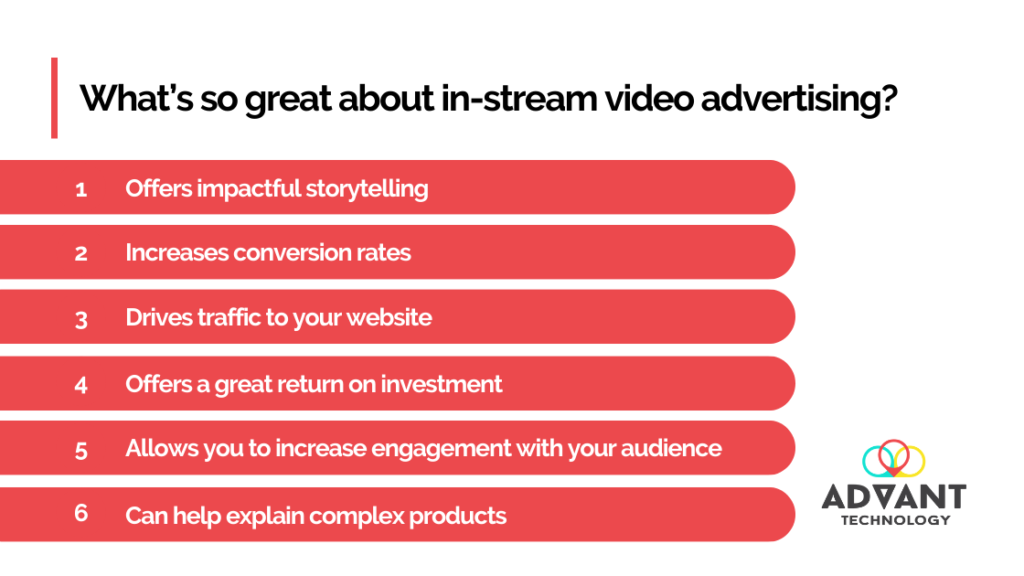
Categories
Blog Programmatic

Trends in programmatic 2021

TRENDS IN PROGRAMMATIC 2021

Last year, we took it upon us to predict some of the most exciting trends we believed would dominate the programmatic advertising space in 2020.

Little did we know that a few months into the new year, the world would be turned upside down, and by the time our Face-to-face meetings turned into Facetime meetings, most industry predictions were thrown out of the window.

Now, we’re turning our focus to the new year and look at some of the key trends we believe will define the programmatic advertising space in 2021.

A TO THE I

Artificial intelligence was one of the key topics we included in last year’s forecast, and although 2020 certainly turned out to be a big year for AI and machine learning in programmatic, we can only see this grow further this year.

With customer journeys becoming more complex and target audiences increasingly specific, it’s becoming more and more difficult to display your ad in front of the right people at the right time. AI’s ability to identify and accurately predict buyer patterns at scale and in real-time is something that human power simply can’t live up to.

In the past, AI has been something of a buzzword, but after seeing the success early adopters have achieved after implementing AI into their programmatic strategy, more and more advertisers swear by the power it holds.

DIGITAL OUT OF HOME (DOOH)

Programmatic Digital Out Of Home or DOOH refers to the automated media trading on digital out of home platforms such as billboards or signage. It’s the evolutionary offspring of one of the oldest and most traditional advertising channels; Out Of Home (OOH) advertising.

Marketeers have long struggled to bridge the customer journey gap between online/offline, and at home/outside of home. Combined with smartphone location data, Digital Out Of Home has the power to drive conversions even in the offline world.

Both DOOH and OOH digital advertising were hit hard by global lockdowns brought on by the pandemic, but the Advertising Association + Warc Expenditure report predicts that it will make a comeback in 2021 with an expected growth of 38.7%.

Take a look at our programmatic DOOH.

PROGRAMMATIC PODCAST ADVERTISING

With more than 150m monthly listeners in the US alone, podcasts are becoming more and more popular.

eMarketer estimates that spend on podcast ads will double by 2022 and reach $106.5 million, and it’s not just in the US that podcasts are gaining momentum. According to WARC, 38% advertisers globally plan to boost their podcast ad spend in 2021.

We can reach users across apps such as Acast, Spotify, Radio.com, Tunein, Deezer across both iOS, Android and across a range of devices including smartphones app & web as well as smart speakers and even in car.

Here at Advant Technology, we’re big fans of programmatic podcast advertising and have vast experience of running both local, national and international campaigns. Read more about our digital audio advertising solutions here.

Categories
Blog Guide Programmatic

A guide to contextual targeting

A GUIDE TO CONTEXTUAL TARGETING

An ad for a stroller displayed on a site for expecting parents or a shampoo ad shown before a hair makeover video. Makes a lot of sense, right?  The method that allows for ads to be displayed alongside highly relevant content is called contextual targeting and can be done through specific keywords or categories relating to the central theme of a website or page.
Contextual Targeting - Advant Technology - Programmatic Advertising 101
Contextual Targeting – Advant Technology – Programmatic Advertising 101

HOW DOES CONTEXTUAL TARGETING WORK?

Before launching a campaign, we choose a set of specific keywords, topics and themes relating to your ads on the Display Network. Google then analyses the content of publishers’ websites and matches it against your chosen keywords, topics, language and location.  An example would be if you are a restaurant chain looking to run an awareness campaign for your newly-opened branch. If a person is nearby and reading a food blog, your ad might get displayed. Because the ad isn’t disruptive (the user is already interested in this type of content), the user is more likely to respond positively to your ad. 
Contextual Targeting - Programmatic Advertising 101 - Advant Technology
Contextual Targeting – Programmatic Advertising 101 – Advant Technology

HOW TO CHOOSE YOUR KEYWORDS

The Google Keyword Planner is a great starting point to start building your keyword list. There are best practices for how to maximise the success from your keyword list. Typically, Google recommends that each ad group should contain anywhere between five to 50 keywords, and they should be shorter and more to the point than the keywords you’d typically use for organic search. 

PLANNING YOUR CAMPAIGN

For a successful contextual ad campaign, it is also important to consider the buying journey of your target group. Do you want to target users in the consideration phase? What type of content will users who are ready to make a purchase consume? By getting a good understanding of this journey, you’ll be able to draft up a more effective list of keywords. 

WHAT DOES IT LOOK LIKE?

We recently worked with  Bompas & Parr who, together with the Design Museum, organised the competition Fountain of Hygiene to raise funds for the British Red Cross in light of Covid-19. Read more about the campaign.  The aim of the campaign was to maximise the number of competition entries. To do so, we used contextual targeting to get the ad displayed alongside relevant content and in front of designers and creatives who would be likely to enter the competition.  Below you’ll find two examples of ad placements for this campaign.

DESIGN WEEK

contextual targeting example The Design Week placement shows an example of category contextual targeting where a page matches a specific pre-assigned category for which the ad matches. The Design Week has a large readership of designers and creatives and our ad would likely fit well alongside any page on the site.

EVENING STANDARD

CONTEXTUAL TARGETING AD EXAMPLE The Evening Standard  shows a result of keyword contextual targeting where the ad is displayed alongside content that matches a specific keyword. Although the site isn’t  necessarily specifically targeted towards our main target group, we were still able to display out content alongside highly relevant content.

INTERESTED IN HEARING MORE?

Our team are experts at planning contextual ad campaigns, so if you’re keen to try out this method for your next ad campaign, please get in touch and we’d be more than happy to help you plan it. 
Categories
Blog Guide Video Advertising

A guide to outstream video advertising

A GUIDE TO OUTSTREAM ADVERTISING

Outstream Video Advertising - Definition - Programmatic Advertising 101 - Advant Technology
Outstream Video Advertising – Definition – Programmatic Advertising 101 – Advant Technology

Ever been reading an article on an editorial site and a video ad starts playing when you scroll over it? This is outstream advertising. As they tend to feel more natural in the environment they are displayed, they are also often referred to as native video ads.

Outstream Advertising - Advant Technology
Outstream Advertising – Advant Technology

What’s so great about outstream video advertising?

  • Capable of achieving 100% viewability
  • Considered less intrusive
  • People view outstream videos for 25% longer than in-stream ads
  • The flexibility makes it compatible with nearly any publisher
  • Increases click-through rates
Benefits of the Outstream Video Advertising - Advertising 101 - Advant Technology
Benefits of the Outstream Video Advertising – Advertising 101 – Advant Technology

What is outstream video advertising?

The word outstream means that this format doesn’t need existing video content to exist. The benefit of this is that publishers don’t need to host videos within their articles to display your ad, and this opens up for a much wider range of publishers to distribute your video ad across.

This ad format offers an engaging ad experience with minimal disruption. The video only plays when the ad is in view. By default, outstream videos are played without sound to cause minimal disruption, but users who wish to engage could opt in to hear the sound.

Outstream Video Advertising - Mockup - Advant Technology
Outstream Video Advertising – Mockup – Advant Technology

Compared to in-stream ad format, outstream offers greater viewable video advertising and longer viewing times.

Categories
Blog Video Advertising

A guide to in-stream video advertising

A Guide to In-Stream Video Advertising

Types of in-stream ads

In-stream video advertising is the most common form of video advertising and comes in three forms: pre-roll, mid-roll and post-roll. 

The in-stream format is designed to quickly and efficiently grab users’ attention, making it a firm favourite among many advertisers. 

In-Stream Video Advertising - Programmatic Advertising - Advant Technology In-Stream Video Advertising – Programmatic Advertising – Advant Technology

Benefits of in-stream video advertising

 
  • Offers impactful storytelling
  • Increases conversion rates
  • Drives traffic to your website
  • Offers a great return on investment
  • Allows you to increase engagement with your audience
  • Can help explain complex products
Why In-Stream Video Advertising - Programmatic Advertising 101 - Advant Technology
Why In-Stream Video Advertising – Programmatic Advertising 101 – Advant Technology

What’s the difference between pre-roll, mid-roll and post-roll?

In-Stream Video Advertising - Pre-roll _ Mid-roll _ Post-roll - Advant Technology
In-Stream Video Advertising – Pre-roll / Mid-roll / Post-roll – Advant Technology

Pre-roll

The most common type of in-stream video advertising. As the name suggests, pre-rolls are ads that are played before an intended video starts and are a great option for brands looking to increase awareness, recollection and purchase consideration.

These ads are typically 15, 30 or 60 seconds long and can be both skippable and non-skippable. To create a successful pre-roll video campaign, it is vital that the first few seconds of the video are as attention-grabbing and engaging as possible. In that way, even if a user doesn’t watch the full ad, they’ll leave with a good impression of your brand.

The right targeting can help display these ads in the right context so that users are likely to engage with the ad.

Mid-roll

Mid-roll video ads play in the middle of a video and tend to be shorter than pre-rolls. As the users have already invested time in watching the video, abandonment rates tend to be lower compared to pre-rolls.

Completion rates tend to be higher for mid-rolls and they are therefore a good option for brands wanting their full ad to be viewed.

Post-roll

Post-roll video ads are the least used in-stream format and play at the end of a video. It may seem counterintuitive to play the ad after a video, but under the right circumstances and with the right strategy, this format can go a long way.

Users are more likely to click through to your page after watching an intended video. They’ve already consumed the video they wanted to watch in the first place, and are ready to jump to another page, so why not yours? For this reason, post-rolls are particularly beneficial when you’ve got a clear CTA.

Interested in hearing more about in-stream video advertising? Speak to our sales team.

To read more about other types of video advertising, read our posts on outstream video advertising and rewarded video advertising.

In-Stream Advertising - Programmatic Advertising - Advant Technology

In-Stream Advertising – Programmatic Advertising – Advant Technology
Categories
Blog Guide Video Advertising

A guide to rewarded video advertising

WIN-WIN: REWARDED VIDEO ADVERTISING

Rewarded Video Advertising: A Win-Win for Users, Advertisers

Think you crushed your last candy? Think again.
Ever played a game and ran out of lives and got angry birds at your friends for not sending you an extra life? What if we told you there’s an easy, fast and free way to keep on playing? Just watch a video ad and you’ll get rewarded with a new life…or access to premium content…or virtual currency. You can basically crush candy until the cows from Farmville come home.

This is what opt-in, or rewarded video advertising is about, and we’re all over it.

What is so great about rewarded advertising? 

  • The power is with the user. Don’t feel like watching the ad? No problem (but you’ll have to wait a minimum of 30 mins to get a new life. And anyone who has played Candy Crush knows Candy Crush minutes are equal to about 300 real minutes)
  • How great is the brand who just helped you reach that new level? A lot better than your so-called friends who refuse to send you extra lives, that’s for sure.
  • It’s a win-win situation where both user and advertiser gets rewarded. In our case, as advertisers who play, it’s like the best thing ever.
  • The target audience is broader than you may think with the average mobile gamer aged 38 years and female

Still not convinced? These numbers talk for themselves:

  • A Facebook survey showed that nearly three in four gamers would happily watch in-game ads  in order to enjoy free games
  • The average CTR (click-through rate) is 7.5 times higher than display ads
  • They can be 86% less expensive than video ads overall
  •  52% of apps say that this type of video ads are the most lucrative type of in-game advertising
  • 71% of players prefer watching in-game video ads than paying for an app
  • 62% of players regularly choose to engage with rewarded video apps by choice
  • 62% of apps saw user retention increase or maintain after the introduction of rewarded video ads

We’ve had great success with rewarded video advertising for many clients. Check out some of our customer success stories from Shore Projects and Activision Blizzard.

Categories
Blog News

Fountain of Hygiene

FOUNTAIN OF HYGIENE

Fountain of Hygiene: Bridging Art and Hygiene Amidst COVID

In light of COVID-19, Bompas & Parr, together with the Design Museum, organised the competition Fountain of Hygiene to raise funds for the British Red Cross.

The competition invited creatives, designers and makers to explore the aesthetic, functional and social possibilities of enhanced hygiene this crisis have brought upon us.

When we were asked to partner with Bompas & Parr to help raise awareness of the Fountain of Hygiene competition, it was a given for us.

To maximise the number of competition entries, our strategy included using contextual targeting to run display banners on websites where we knew designers and creatives would spend their time, and in the end, our awareness campaign helped secure an impressive 182 entries.

contextual targeting

Terry Hearnshaw’s unit dose dispensing system won the London & Partners Sustainable Design category

Once the contestants had submitted their works, they were evaluated by a panel of eminent judges including:

Jules Chappell OBE
Managing Director of the Mayor Of London’s Promotional And Economic Development Agency, London & Partners

Marcus Fairs
Founder and Editor-in-Chief of Dezeen

Tim Marlow OBE
Chief Executive and Director, Design Museum

Harry Parr
Architect and Founder of Bompas & Parr

Deb Pellen
Global Director, Innovation at Bacardi

Serena Rees
British Businesswoman and Founder of les boys les girls

Prof Charles Spence
Experimental Psychologist and Head of the University of Oxford’s Crossmodal Research Laboratory

Bee Wilson
Food Journalist, Author and Historian

The winners were shortlisted by the jury based on four criteria including innovation, functionality, social impact and aesthetics.

With so many beautiful, whacky, innovative designs, it’s no exaggeration to say that the competition was fierce.

Check out the winning entries here.

Sally Reynolds’ stunning soap dispenser won the Luxury Design category

Sally Reynolds’ stunning soap dispenser won the Luxury Design category

Read some of our customer success stories where we’ve also used display banners.

Categories
Blog Guide Programmatic

Open Auctions

OPEN AUCTIONS

I know what you’re thinking. A digital advertising phrase that is not an acronym? What is going on? 

Calm down there cowboy. You can always trust the digital advertising community to come up with TLSs (three-letter acronyms). For Open Auctions, they’ve settled on RTB (Real-Time Bidding).

What are open auctions?

An open auction is a real-time bidding process that allows multiple publishers and advertisers to bid on ad inventory. 

What are the pros?

  • Cost-effective: these types of auctions are great if you’re looking for a large reach and have a relatively small budget to play with
  • Straightforward: easier and faster to set up compared to other media-buying methods 
  • Targeting: access to multiple powerful targeting options including third-party data
  • Optimisations: the advertisers can be creative with formats and optimisations to engage with the user
  • Reach: you can reach target audiences irrespective of the sites they are visiting 

What are the cons?

  • Non-premium: inventory us not as premium as other buying-methods
  • Ad fraud: chances of ad fraud can be greater compared to closed auctions
  • Brand safety: a chance to appear on sites you don’t want to associate with
  • Lack of transparency: no set price structures 

When to choose open auctions:

  • When you want access to a large range of inventory at lower rates and want to have the fluidity of easy access 
  • When access to third-party data and other targeting technologies would be beneficial to overlay on top of your open auction

When to avoid open auctions:

  • When you want access to more premium inventory (mastheads, roadblocks etc.) 
  • When the publisher is offering premium inventory along with premium targeting only accessible buy some form of programmatic media 

If you want to learn more about other types of programmatic media-buying, check out our blog post on PMPs (private marketplace deals).

Categories
Blog Programmatic

Private Marketplace Deals (PMPs)

PRIVATE MARKETPLACE DEALS (PMPs)

A guide to Private Marketplace Deals in programmatic advertising

If you’re new to the world of digital advertising, you may have noticed that the industry is full (and we mean FULL) of buzzwords and acronyms. To help navigate this notoriously complex landscape, we thought we’d break down some of the most commonly used industry jargon. 

We’re starting off with one of our favourite TLAs (three-letter acronyms, that is): PMP. 

What is the meaning of  PMP?

PMP stands for Private Marketplace and is a programmatic media-buying method.

Compared to open auctions, PMP is an invitation-only bidding process where publishers invite selected buyers to take place in real-time bidding to purchase their inventory. What is a PMP Programmatic advertising?

The minimum price of the bids is referred to as ‘floor price’ and is negotiated before the auction starts. Private marketplace deals are more targeted and premium than open auction deals, which is reflected in the price. 


PMP Marketing: How Private Marketplaces Enhance Ad Campaigns

By providing a more curated and targeted advertising environment, PMPs allow brands to reach specific audiences with premium content. This approach ensures advertisers avoid the clutter of open marketplaces while focusing on high-quality placements. PMP deals are ideal for campaigns aiming for precision, brand safety, and control over where ads appear.

In programmatic marketing, PMP offers a way to leverage programmatic technology with greater transparency and trust between publishers and advertisers. Marketers use PMPs to refine their audience targeting while optimizing performance metrics like viewability and click-through rates.

What are the pros of private marketplace deals?

  • Transparency: It gives both buyers and sellers transparency of the auction
  • Relationship building: Publishers and buyers negotiate and agree on terms and pricing, which allows for mutual understanding and strong relationships to be built
  • Premium inventory: Gives access to higher-quality inventory before it ends up on the open market
  • Targeting: Allows advertisers to target specific audiences 

What are the cons of private marketplace deals?

  • Only partly-automated, meaning the buying process can require more manual labour and time compared to open auctions 
  • Non-guaranteed inventory: there is no guarantee you’ll get the inventory you want
  • Pricing: Costs tend to be slightly higher than open auction deals

When to choose PMPs:

  • When you have a whitelist of publishers you want to display your ads across 
  • When you want access to higher-quality inventory before it ends up on the open market
  • When you have a specific target audience for your campaign

When to avoid private auctions:

  • When a campaign requires guaranteed ad impressions or ad placements
  • When you want a fixed price for the inventory 

Launch your next PMP advertising campaign with Advant

If you’re looking to integrate PMP marketing into your digital strategy, or want to explore how programmatic advertising can elevate your campaigns, feel free to reach out to our team for personalised advice.

Categories
Blog Tourism

Tourism industry marketing: Why Wikipedia matters

TOURISM INDUSTRY MARKETING: WHY WIKIPEDIA MATTERS

Elevating Tourism Marketing: The Significance of Wikipedia

Here at Advant Technology, we specalise in paid digital media but we still keep our ear to the ground to see what’s happening in the wider marketing world.

We recently came across a fascinating academic article highlighting the value of content in increasing overnight stays in smaller cities.

How, you ask? By adding information to Wikipedia pages where there was relatively little information, consumers were able to make a more informed decision, this information influenced where they decided to travel and for how long.

The article highlights the importance of having a strong online presence, this presence leads to greater awareness which in turn leads to more travel resulting in positive economic returns.

Read the full study here.

If you’re interested in learning how you might be able to run a program like this at scale in multiple languages, reach out to us and we can recommend a sister agency who can do just that using proprietary technology.

Categories
Blog Programmatic

Trends in programmatic 2020

TRENDS IN PROGRAMMATIC 2020

2020 is an exciting year with continued growing investment in the programmatic advertising space. Millions of apps, sites and endless formats from which to choose from. The fragmentation of media and digital touchpoints have arguably made marketers’ jobs increasingly harder. At Advant Technology we help brands and agencies navigate the complex world of programmatic through expert knowledge of ad tech platforms.

The trends we’re exploring this year include:

Artificial Intelligence

Undoubtedly one of the hottest topics in programmatic advertising right now. We’ve seen massive uplifts of up to 40% in performance campaigns optimising towards metrics including cost per acquisition, cost per view and effective cost per click. You can explore our dedicated post here.

AI has been helping analyse the thousands of data points available to improve optimisation beyond what a human can achieve.

5G

This fascinating technology will enable a more connected world. Speeds that can surpass 100giagabits per second is 100 times faster than 4G technology. This will enable advertisers to deliver a richer advertising experience. High-speed 5g means less buffering time for rich media and heavy high-quality video files thereby improving the user experience and potentially encouraging more advertising revenue, clearly then a huge opportunity.

Digital Audio Ads

The world’s first radio station was KDKA launched in Pittsburgh in 1920. Radio’s come a long way since then playing a huge role in how we receive our news, listen to music and more, fast forward 100 years and the US will be spending more time listening to digital audio than radio according to emarketer.

Contextual Advertising

In a post-GDPR and CCPA apocalypse, world audience data activation has many challenges. Contextual advertising technology does not use cookies or customer data and is, therefore, having a resurgence. Contextual ads use keyword and semantic technology to understand the context of the page and thus allow advertisers to deliver ads that are more relevant.

Categories
Blog Programmatic

Basic targeting methodology using a Demand Side Platform (DSP)

BASIC TARGETING METHODOLOGY USING A DSP

Demand Side Platform - DSP - Programmatic Advertising 101 - Advant Technology

Mastering Basic Targeting Methodology With a Demand Side Platform

A DSP (demand side platform) allows you to target users via multiple formats that generally include display banners, video and native advertising. Ensure your ad has the best chance of reaching the right audience, regardless of format. In this short post, we’ll walk you through the main ways a DSP allows you to target. Don’t forget to research and fully understand your audience to select the right targeting parameters. Let’s dive in and take a look:

Geo-Targeting

Probably the most basic targeting methodology and at the very least you should apply some kind of country level targeting. Clearly there’s no point in advertising to people in another region or country if you only sell to people based in the United Kingdom.

Options include Country > state/region > zip code / post code or LAT LONG co-ordinates.

Geo-Targeting

Day Part Targeting

Refers to the hours of the day that your campaign is live. We often have requests from advertisers who only want to advertise between the hours of 7am and 10pm. This is normally associated with brand safety, however, there may be other reasons for using day part targeting. Let’s say you have an app that helps people relax, well maybe it makes sense to advertise just before bed or first thing in the morning, where people are more open and responsive to your messages.

Audience Targeting

Typically allows you to select audiences based on their interest or behaviour. Here’s a quick snapshot of the most effective routes.

  • Affinity Audiences (interest)
  • Customer match (using email address, phone number or other method to learn more visit Liveramp
  • Demographic such as age and gender
  • In-Market audiences e.g. inmarket to buy a used car

Re-Targeting

We’ve all seen those annoying ads that seem to follow us around after we’ve visited a retailers site. These ads are known as retargeting ads and can have a product feed showcasing the exact products you viewed as well as other products that you might be interested in. These product feeds can be implemented using an adserver such as campaign manager from Google DV360. Most businesses go wrong with retargeting by failing to frequency cap, bombarding users with too many ads. Make sure you control the number of times an ad is seen by a user respecting the balance between selling and privacy and applying a reasonable frequency cap such as 1 in 24 hours.

Device Targeting

Perhaps the product you’re selling is an app? Well it probably makes sense to only serve ads on mobile devices, where the path to purchase is shorter. Device targeting allows you to control whether you target mobile, desktop or tablets.

Device targeting

Browser Targeting

Maybe you need to target Apple users only. Well perhaps a good starting point would be targeting the Safari browser whose audience is typically Apple users. Browser targeting on the most widely used DV360 platform include:

  • Chrome
  • Firefox
  • Internet Explorer
  • Microsoft Edge
  • Opera
  • Safari

Browser Targeting

We’ll look to deep dive into some of the more advanced DSP targeting tactics later but for now we hope you find the above a welcome introduction.

Photo by Yucel Moran on Unsplash Photo by Nathan Dumlao on Unsplash Photo by Daniel Korpai on Unsplash

Categories
Blog Programmatic

Benefits of Programmatic Advertising

BENEFITS OF PROGRAMMATIC ADVERTISING

Benefits of the Programmatic Advertising - Advant Technology

Programmatic Advertising: Transparency, Real-Time Stats

Benefits of the Programmatic Advertising – Advant Technology[/caption]

Programmatic advertising has been for many years been a medium to buy advertising online, however, in the past couple of years we’ve seen the growth of programmatic for offline advertising like Digital Out of Home and this is only set to increase.

For the purposes of this article, we’ll be focusing on online programmatic advertising which is defined by DIGIDAY as:

“the use of software to purchase digital advertising, as opposed to the traditional process that involves RFPs, human negotiations, and manual insertion orders.”  It’s using machines to buy ads, basically.

Four Benefits of Programmatic Advertising - Advant Technology
Four Benefits of Programmatic Advertising – Advant Technology

Now we know what it is, let’s explore the benefits:

Transparency

Programmatic advertising does have it’s bad players and there are people out there who want to game the system, but on the whole programmatic advertising does allow advertisers to see exactly where their ads are being placed, on which sites/apps and the performance of each placement and whether those ads are viewable.

Real-Time Measurement

Understanding how your campaign is performing in real-time is a real joy, no more waiting around for weeks on end to see the effects of your advertising or waiting for your agency to provide laggard reports. Real-time measurement allows you to see key data 24 hours a day (if you’re that keen). Here is a full list of the metrics you can export from DV360 right now! As you can imagine a huge amount of data is generated so it’s key you focus on the metrics that matter to your campaign, shameless plug, we can help you with that!

  • Begin to Render Eligible Impressions
  • Begin to Render Impressions
  • Billable Impressions
  • Click Rate (CTR)
  • Clicks
  • CM Post-Click Revenue
  • CM Post-View Revenue
  • Engagement Rate
  • Engagements
  • First-Quartile Views (Video)
  • Midpoint Views (Video)
  • Third-Quartile Views (Video)
  • Complete Views (Video)
  • Impressions
  • Media Cost
  • Post-Click Conversions
  • Post-View Conversions
  • Revenue
  • Total Conversions
  • Total Media Cost
  • Tracked Ads
  • TrueView: Views
  • Active View: % Audible and Visible at Completion
  • Active View: % Audible and Visible at First Quartile
  • Active View: % Audible and Visible at Midpoint
  • Active View: % Audible and Visible at Start
  • Active View: % Audible and Visible at Third Quartile
  • Active View: % Audible Impressions
  • Active View: % Full-Screen
  • Active View: % Fully On-Screen 2 sec
  • Active View: % In Background
  • Active View: % Measurable Impressions
  • Active View: % of Ad Played
  • Active View: % of Completed Impressions Audible and Visible
  • Active View: % of Completed Impressions Visible
  • Active View: % of First Quartile Impressions Audible and Visible
  • Active View: % of First Quartile Impressions Visible
  • Active View: % of Midpoint Impressions Audible and Visible
  • Active View: % of Midpoint Impressions Visible
  • Active View: % of Third Quartile Impressions Audible and Visible
  • Active View: % of Third Quartile Impressions Visible
  • Active View: % Play Time Audible
  • Active View: % Play Time Audible and Visible
  • Active View: % Play Time Visible
  • Active View: % Viewable Impressions
  • Active View: % Visible 10 Seconds
  • Active View: % Visible at Completion
  • Active View: % Visible at First Quartile
  • Active View: % Visible at Midpoint
  • Active View: % Visible at Start
  • Active View: % Visible at Third Quartile
  • Active View: Audible & Fully On-Screen for Half of Duration (15 sec. cap) Impressions
  • Active View: Audible & Fully On-Screen for Half of Duration (15 sec. cap) Measurable Impressions
  • Active View: Audible & Fully On-Screen for Half of Duration (15 sec. cap) Rate
  • Active View: Audible & Fully On-Screen for Half of Duration (TrueView) Impressions
  • Active View: Audible & Fully On-Screen for Half of Duration (TrueView) Measurable Impressions
  • Active View: Audible & Fully On-Screen for Half of Duration (TrueView) Rate
  • Active View: Average Viewable Time (Seconds)
  • Active View: Custom Metric Measurable Impressions
  • Active View: Custom Metric Viewable Impressions
  • Active View: Custom Metric Viewable Rate
  • Active View: Eligible Impressions
  • Active View: Impression Distribution (Not Measurable)
  • Active View: Impression Distribution (Not Viewable)
  • Active View: Impression Distribution (Viewable)
  • Active View: Impressions Audible and Visible at Completion
  • Active View: Impressions Visible 10 Seconds
  • Active View: Measurable Impressions
  • Active View: Not Measurable Impressions
  • Active View: Not Viewable Impressions
  • Active View: Viewable Impressions
  • % Clicks Leading to Conversions
  • % Impressions Leading to Conversions
  • Audio Client Cost eCPCL
  • Audio Revenue eCPCL
  • Client Cost
  • Client Cost eCPA
  • Client Cost eCPA (PC)
  • Client Cost eCPA (PV)
  • Client Cost eCPC
  • Client Cost eCPM
  • Client Cost Viewable eCPM
  • CM Post-Click Revenue
  • CM Post-Click Revenue + Cross-Environment
  • CM Post-View Revenue
  • CM Post-View Revenue + Cross-Environment
  • Conversions per 1000 Impressions
  • Gmail Conversions
  • Gmail Post-Click Conversions
  • Gmail Post-View Conversions
  • Post-Click Conversions
  • Post-Click Conversions + Cross-Environment
  • Post-View Conversions
  • Post-View Conversions + Cross-Environment
  • Revenue
  • Revenue eCPA
  • Revenue eCPA (PC)
  • Revenue eCPA (PV)
  • Revenue eCPC
  • Revenue eCPM
  • Revenue Viewable eCPM
  • Total Conversions
  • Total Conversions + Cross-Environment
  • Video Client Cost eCPCV
  • Video Revenue eCPCV
  • AdLingo Fee
  • Adloox Fee
  • Adloox Pre-Bid Fee
  • Adsafe Fee
  • AdXpose Fee
  • Agency Trading Desk Fee
  • Aggregate Knowledge Fee
  • Billable Cost
  • comScore vCE in DoubleClick Fee
  • Data Fees
  • Data Management Platform Fee
  • DoubleVerify Fee
  • DoubleVerify Pre-Bid Fee
  • Evidon Fee
  • Integral Ad Science Pre-Bid Fee
  • Integral Ad Science Video Fee
  • MediaCost Data Fee
  • MOAT Video Fee
  • Nielsen Digital Ad Ratings Fee
  • Platform Fee
  • Platform Fee Rate
  • Premium Fee
  • ShopLocal Fee
  • Teracent Fee
  • Third-Party Ad Server Fee
  • TrustMetrics Fee
  • Vizu Fee
  • Audio Mutes (Audio)
  • Audio Unmutes (Audio)
  • Companion Clicks (Audio)
  • Companion Impressions (Audio)
  • Complete Listens (Audio)
  • First-Quartile (Audio)
  • Midpoint (Audio)
  • Pauses (Audio)
  • Starts (Audio)
  • Stops (Audio)
  • Third-Quartile (Audio)
  • Companion Clicks (Video)
  • Companion Impressions (Video)
  • Skips (Video)
  • General Invalid Traffic (GIVT) Begin to Render Impressions
  • General Invalid Traffic (GIVT) Clicks
  • General Invalid Traffic (GIVT) Impressions
  • Invalid Clicks
  • Invalid Impressions
  • Invalid Active View Eligible Impressions
  • Invalid Active View Measurable Impressions
  • Invalid Active View Viewable Impressions
  • General Invalid Traffic (GIVT) Active View Eligible Impressions
  • General Invalid Traffic (GIVT) Active View Measurable Impressions
  • General Invalid Traffic (GIVT) Active View Viewable Impressions
  • General Invalid Traffic (GIVT) Tracked Ads
  • Invalid Begin to Render Impressions
  • Invalid Tracked Ads
  • TrueView: General Invalid Traffic (GIVT) Views
  • TrueView: Invalid Views
  • Audio Media Cost eCPCL
  • Media Cost
  • Media Cost eCPA
  • Media Cost eCPA (PC)
  • Media Cost eCPA (PV)
  • Media Cost eCPC
  • Media Cost eCPM
  • Media Cost Viewable eCPM
  • Total Audio Media Cost eCPCL
  • Total Media Cost
  • Total Media Cost eCPA
  • Total Media Cost eCPA (PC)
  • Total Media Cost eCPA (PV)
  • Total Media Cost eCPC
  • Total Media Cost eCPM
  • Total Media Cost Viewable eCPM
  • Total Video Media Cost eCPCV
  • Video Media Cost eCPCV
  • Profit
  • Profit eCPM
  • Profit Margin
  • Profit Viewable eCPM
  • Programmatic Guaranteed impressions passed due to frequency
  • Programmatic Guaranteed savings re-invested due to frequency
  • Refund Billable Cost
  • Refund Media Cost
  • Refund Platform Fee
  • Audio Mutes (Video)
  • Audio Unmutes (Video)
  • Average Display Time
  • Average Interaction Time
  • Completion Rate (Audio)
  • Completion Rate (Video)
  • Counters
  • Exits
  • Expansions
  • First-Quartile Views (Video)
  • Midpoint Views (Video)
  • Third-Quartile Views (Video)
  • Complete Views (Video)
  • Fullscreens (Video)
  • Interactive Impressions
  • Pauses (Video)
  • Rich Media Engagements
  • Scrolls
  • Starts (Video)
  • Timers
  • Total Display Time
  • Total Interaction Time
  • TrueView: Views
  • Verifiable Impressions
Programmatic Advertising Definition - Advant Technology
Programmatic Advertising Definition – Advant Technology

Efficiency

By reducing the human friction points of buying and selling advertising efficiencies can be gained. Less paper shuffling and more action! We can gain efficiency beyond just automation though, with so much data to hand, being available in real time, campaigns can be optimised and machine learning applied in order to increase the ROI on your campaigns. Here at Advant Technology optimisation is our mantra, so we’re constantly assessing and analysing data to improve ROI for our clients.

Targeting

We’ve explored targeting in a bit more detail in this post, in short though, rather than the old spray and pray method of advertising, programmatic allows you to be ultra-targeted pinpointing only those most likely to buy your products or services. The many targeting parameters available within a DSP help you pick and choose from the billions of impressions available across the real-time bidding ecosystem.

Categories
Blog Programmatic

Machine Learning and AI in Programmatic

MACHINE LEARNING AND AI IN PROGRAMMATIC

Using Artificial Intelligence in Programmatic Advertising - Advant Technology - Word Cloud
Using Artificial Intelligence in Programmatic Advertising – Advant Technology – Word Cloud

Artificial Intelligence in Programmatic Advertising

Programmatic is the process of using software to buy digital advertising. Here at Advant Technology, we specialise in programmatic advertising across the real-time bidding ecosystem. Real-time bidding is the process of buying ads on an individual impression basis. The process of a publisher auctioning an impression from their website/app and a buyer buying the impression is near-instant.

Artificial Intelligence for Ads

At Advant Technology we’ve employed independent artificial intelligence specialists who build models using data available from our DSP platforms. These models which go beyond machine learning help to increase ROI by using bid modifiers picking and choosing the impressions that are deemed most valuable. All of this can, of course, be done by a human but AI speeds up this process further increasing efficiency and giving our clients a competitive and unique advantage. Typically, the variables that AI will use to make decisions comes from aggregated across the following areas:

  1. Geolocation data (country, region, city)
  2. Time partition data (hour of the day, day of the week)
  3. Size of creatives
  4. Data regarding Operation systems (Family, version, carrier)
  5. Data regarding the browser (browser id, browser language)
  6. Data regarding gender
  7. Data regarding the device (device type [computer, tablet, smartphone..], device model)
  8. Data regarding the placement (placement id, placement group, publisher id, seller id, domain, fold position, mobile app instance)
  9. Data regarding the supply type (browser web, mobile web, app web)
  10. Data regarding the viewability and the completion rate(predicted IAB Viewability Rate, Predicted IAB Video Viewability Rate, Predicted Video completion rate)
  11. Data regarding the segments (when segment are owned by the seat and their data is accessible through the LLD)
  12. Data regarding the frequency/recency of impressions  
Real-time bidding for programmatic advertising - Advant Technology
Real-time bidding for programmatic advertising – Advant Technology

READY TO TAKE ADVANTAGE?

Ready for advertising that really works? Take advantage of our FREE programmatic or paid social review.